Search the SPREP Catalogue

Refine Search Results

Tags / Keywords

Available Online

Tags / Keywords

Available Online

5 result(s) found.

Sort by

You searched for

  • Tags / Keywords Felis catus (Cat )
    X
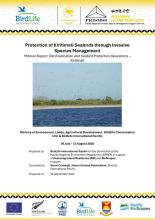
Protection of Kiritimati Seabirds through Invasive Species Management
SPREP Publications, Biodiversity Conservation, BRB
Available Online

Cranwell, Steve

2025
The Wildlife Conservation Unit and BirdLife International successfully completed baiting operations to eradicate Pacific rats from 13 motu including Motu Upua in the Kiritimati Central Lagoon. Four of these motu were previously rat free (Drum islets) and 3 others (Nimroona islets) had been baited in 2023 but rats (and one cat) were confirmed present likely following a reduction in the water level of the lagoon. The 14-day field mission also strengthened WCUs capability for detecting rats and cats and in the use of tools and practices to eradicate them. A suppression response for cats was initiated on Big Peninsula but requires WCU personnel to have regular access to vehicles to operationalise it. Observations of seabirds confirmed Phoenix Petrel numbers remain high for the Drum and Nimroona islets, but few nesting Red-tailed Tropicbirds were observed and may be attributable to the widespread poaching of these and other seabirds. Access to vehicles enabling reinstatement of regular patrols by WCU personnel is considered critical and could be facilitated through specialist expertise and the provision of parts in making repairs to the existing fleet. Other recommendations include a regular surveillance programme for priority islets to detect and respond to rat incursions.
Abundance and Home ranges of Feral Cats in an Urban Conservancy where there is Supplemental Feeding: a case study from South Africa
Biodiversity Conservation, BRB
Available Online

Downs, C.T.

,

Tennent, J.

2008
There is much debate surrounding the impact of feral cats (Felis catus) on wildlife. Conservancies areusually areas where indigenous flora and fauna are protected and aliens excluded or managed. The University of KwaZulu-Natal’s Howard College campus (HCC) is an urban conservancy containing feral cats that are presently not managed, and little is known about their ecology and behaviour. Consequently a feral cat population census was conducted, and their home range investigated. Estimates of the overall campus feral cat population numbers ranged between 23.4–40.0 cats/km2 with a minimum of 55 identified as resident. They were not randomly distributed in the study area, with spacing patterns being related to resource availability. Home range area and core distribution of eight radio-collared cats were determined over 13 months. Total home range areas were relatively small, with considerable overlap between them. Home ranges were clustered in areas with permanent feeding stations and these were also within the cats’ core ranges. Supplemental food resources appear to have a major influence on numbers, home and core range area, and behavior of cats. It is clear that cat densities grow to high levels with reliable and abundant food supply and only ad hoc sterilization. This has implications for their management in the HCC urban conservancy.