Search the SPREP Catalogue

Refine Search Results

Tags / Keywords

Available Online

Tags / Keywords

Available Online

16 result(s) found.

Sort by

You searched for

  • Tags / Keywords Rattus spp. (Rats)
    X
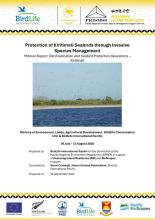
Protection of Kiritimati Seabirds through Invasive Species Management
SPREP Publications, Biodiversity Conservation, BRB
Available Online

Cranwell, Steve

2025
The Wildlife Conservation Unit and BirdLife International successfully completed baiting operations to eradicate Pacific rats from 13 motu including Motu Upua in the Kiritimati Central Lagoon. Four of these motu were previously rat free (Drum islets) and 3 others (Nimroona islets) had been baited in 2023 but rats (and one cat) were confirmed present likely following a reduction in the water level of the lagoon. The 14-day field mission also strengthened WCUs capability for detecting rats and cats and in the use of tools and practices to eradicate them. A suppression response for cats was initiated on Big Peninsula but requires WCU personnel to have regular access to vehicles to operationalise it. Observations of seabirds confirmed Phoenix Petrel numbers remain high for the Drum and Nimroona islets, but few nesting Red-tailed Tropicbirds were observed and may be attributable to the widespread poaching of these and other seabirds. Access to vehicles enabling reinstatement of regular patrols by WCU personnel is considered critical and could be facilitated through specialist expertise and the provision of parts in making repairs to the existing fleet. Other recommendations include a regular surveillance programme for priority islets to detect and respond to rat incursions.
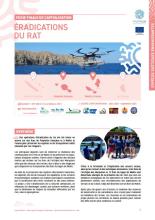
Eradications du rat - Fiche finale de capitalisation - PROTEGE
SPREP Publications, Biodiversity Conservation, BRB
Available Online

PROE / SPREP

2025
Des opérations d’éradication du rat ont été mises en œuvre sur des îlots de Polynésie française et à Wallis et Futuna pour préserver les espèces et les écosystèmes natifs menacés par ces rongeurs. Les principaux objectifs sont de renforcer la résilience des communautés d’Ua Pou et de Wallis et de préserver les populations d’espèces natives. Parmi celles-ci figurent des oiseaux marins qui nichent sur les îlots de l’archipel des Marquises ainsi que des oiseaux, des tortues, des crabes et des végétaux qui composent les écosystèmes des îlots du lagon de Wallis. Au-delà de la protection des espèces directement menacées, les objectifs ont été de restaurer les équilibres et les services écosystémiques auxquels ces espèces participent, notamment par la fertilisation des récifs coralliens et des eaux côtières. Le projet a visé l’amélioration de la sécurité alimentaire, en réduisant les dommages causés aux cultures vivrières, ainsi que la diminution de risques de maladies véhiculées par les rats, telle la leptospirose. Grâce à la formation et l’implication des acteurs locaux, ainsi qu’au recours à des techniques innovantes, trois îlots de l’archipel des Marquises et 13 îlots du lagon de Wallis sont désormais exempts de la présence du rat. Bien que tous les bénéfices écologiques de ces opérations ne soient pas encore pleinement connus, une recrudescence des populations de tortues et de crabes a déjà été observée sur les îlots de Wallis. FICHE FINALE DE CAPITALISATION DU PROJET PROTEGE, financé par l'Union Européenne.
Technical Support to Melad in Rat Eradication, Biosecurity Motu Surveys, and Seabird Monitoring at Kiritimati, Kiribati, November 2023
SPREP Publications, Biodiversity Conservation, BRB
Available Online

Cranwell, S.

,

Pierce, R.

,

Taabu, K.

2023
Field support and training was provided to Government of Kiribati staff at Kiritimati (Christmas Island) during 1-15 November 2023 as part of a Biopama project facilitated by BirdLife/SPREP. This project focused on rat eradication for biodiversity recovery, and associated outcome monitoring and capacity building. Specific objectives (and outcomes) included eradicating Kimoa (Rattus exulans) which had reinvaded Big Nimroona and SW Nimroona motu in 2017 (both motu were baited 6 days apart); confirming the status of invasives and birds on other key motu (checks of other significant motu indicated that Kimoa remain absent and rat-sensitive birds are thriving as a result); monitoring of endangered seabirds revealed that the Kiritimati population of Te Ruru continues to increase, while a large number of smaller motu provide secure nesting for Te Bwebwe ni Marawa; determining island and motu biosecurity needs (detailed biosecurity needs lists were completed and motu surveillance protocols adapted); and some additional training was completed for all.