Search the SPREP Catalogue

Refine Search Results

Language

Available Online

Available Online

13 result(s) found.

Sort by

You searched for

  • Collection BRB
    X
  • Related Countries Niue
    X
  • Related Countries Kiribati
    X
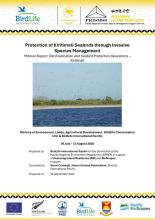
Protection of Kiritimati Seabirds through Invasive Species Management
BRB
Available Online

Cranwell, Steve

2025
The Wildlife Conservation Unit and BirdLife International successfully completed baiting operations to eradicate Pacific rats from 13 motu including Motu Upua in the Kiritimati Central Lagoon. Four of these motu were previously rat free (Drum islets) and 3 others (Nimroona islets) had been baited in 2023 but rats (and one cat) were confirmed present likely following a reduction in the water level of the lagoon. The 14-day field mission also strengthened WCUs capability for detecting rats and cats and in the use of tools and practices to eradicate them. A suppression response for cats was initiated on Big Peninsula but requires WCU personnel to have regular access to vehicles to operationalise it. Observations of seabirds confirmed Phoenix Petrel numbers remain high for the Drum and Nimroona islets, but few nesting Red-tailed Tropicbirds were observed and may be attributable to the widespread poaching of these and other seabirds. Access to vehicles enabling reinstatement of regular patrols by WCU personnel is considered critical and could be facilitated through specialist expertise and the provision of parts in making repairs to the existing fleet. Other recommendations include a regular surveillance programme for priority islets to detect and respond to rat incursions.
COP28 PRISMSS Side Event (Summary) - Restoring Island Restoring Island Resilience
Biodiversity Conservation, BRB
Available Online

Secretariat of the Pacific Regional Environment Programme (SPREP)

2024
The Pacific Island nations of Niue and Tonga are leading global efforts to expand the management of invasive species at a large-landscape scale and increase the resilience of their ecosystems and communities to the impacts of climate change. Niue’s Environment Minister, Hon. Mona Ainuu, recently made an ambitious pledge for the country to control four priority invasive species by 2030, including Taro Vine, rats, feral pigs, and the coral eating Drupella snail. This work will help to enhance Niue’s premium ecotourism brand and directly support the provision of green jobs. Tonga has also pledged to expand the management of priority invasive species at a large-landscape scale following the successful eradication of rats from Late Island, the largest eradication ever undertaken in the Pacific Islands region. Studies have shown that, once rats are removed, the nutrients from returning seabird populations restore the climate resilience of coral reefs and increase the productivity of fish stocks by up to 50%. Tonga’s plans to scale-up the management of priority invasive species will help expand its national park system, provide refugia for 95% of the country’s biodiversity, and directly increase the climate resilience of its ecosystems and communities.
COP28 PRISMSS Side Event -Restoring Island Resilience
Biodiversity Conservation, BRB
Available Online

Secretariat of the Pacific Regional Environment Programme (SPREP)

2024
The Pacific Island nations of Niue and Tonga are leading global efforts to expand the management of invasive species at a large-landscape scale and increase the resilience of their ecosystems and communities to the impacts of climate change. Niue’s Environment Minister, Hon. Mona Ainuu, recently made an ambitious pledge for the country to control four priority invasive species by 2030, including Taro Vine, rats, feral pigs, and the coral eating Drupella snail. This work will help to enhance Niue’s premium ecotourism brand and directly support the provision of green jobs. Tonga has also pledged to expand the management of priority invasive species at a large-landscape scale following the successful eradication of rats from Late Island, the largest eradication ever undertaken in the Pacific Islands region. Studies have shown that, once rats are removed, the nutrients from returning seabird populations restore the climate resilience of coral reefs and increase the productivity of fish stocks by up to 50%. Tonga’s plans to scale-up the management of priority invasive species will help expand its national park system, provide refugia for 95% of the country’s biodiversity, and directly increase the climate resilience of its ecosystems and communities.