Search the SPREP Catalogue

Refine Search Results

Related Countries

Language

Available Online

Related Countries

Available Online

44 result(s) found.

Sort by

You searched for

Improving the breeding success of a colonial seabird: a cost-benefit comparison of the eradication and control of its rat predator
BRB
Available Online

Bretagnolle, Vincent.

,

Culioli, Jean-Michel.

,

Lorvelec, Olivier.

,

Pascal, Michel Pascal.

2008
Breeding success of 5 Cory’s shearwater Calonectris diomedea sub-colonies of Lavezzu Island (Lavezzi Archipelago, Corsica) was checked annually for 25 consecutive years from 1979 to 2004. Between 1989 and 1994, 4 ship rat Rattus rattus controls were performed in several subcolonies. In November 2000, rats were eradicated from Lavezzu Island and its 16 peripheral islets (85 ha) using traps then toxic baits. We compare cost (number of person-hours required in the field) and benefit (Cory’s shearwater breeding success) of control and eradication. The average breeding success doubled when rats were controlled or eradicated (0.82) compared to the situation without rat management (0.45). Moreover, the average breeding success after eradication (0.86) was significantly (11%) higher than after rat controls (0.75). Furthermore, the great variation in breeding success recorded among sub-colonies both with and without rat control declined dramatically after eradication, suggesting that rats had a major impact on breeding success. The estimated effort needed to perform eradication and checking of the permanent bait-station system during the year following eradication was 1360 person-hours. In contrast, rat control was estimated to require 240 or 1440 person-hours per year when implemented by trained and untrained staff, respectively. Within 6 yr, eradication cost is lower than control cost performed by untrained staff and confers several ecological advantages on more ecosystem components than Cory’s shearwater alone. Improved eradication tools such as hand or aerial broadcasting of toxic baits instead of the fairly labour-intensive eradication strategy we used would dramatically increase the economic advantage of eradication vs. control. Therefore, when feasible, we recommend eradication rather than control of non-native rat populations. Nevertheless, control remains a useful management tool when eradication is not practicable.

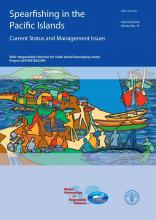
Spearfishing in the Pacific islands: current status and management issues
Biodiversity Conservation
Available Online

Gillett, Robert

,

Moy, Wayne

2006
Spearfishing is growing in importance in the Pacific Islands. While its management has featured as a topic in some regional-level meetings, detailed information on spearfishing is surprisingly scarce. In early 1994, the Secretariat of the Pacific Community (SPC) proposed to consolidate information on spearfishing in the Pacific Islands. The original intent was to undertake a review of the available literature through a desk study. With the realization that many issues related to spearfishing are undocumented, the strategy was changed to include some field work. These activities were supported by the FAO FishCode Programme. This report reviews spearfishing in selected Pacific Island countries and identifies the important species caught by and the major problems associated with the method. It further considers possible interventions to mitigate these problems and the assistance that is likely to be required by Pacific Island countries in the management of their spearfisheries. Visits to five countries undertaken during the study show that there are very large differences between countries, and between locations within a single country, in the level and type of spearfishing activities. General conclusions on the management of spearfishing include: (a) for several reasons, a complete ban of scuba spearfishing coupled with effective enforcement is the single most important spearfishing management measure; (b) spearfishing effort must be managed along with other forms of inshore fishing, since attempts at restricting spearfishing alone are not likely to be successful as fishing effort may b easily transferred to other small-scale fishing methods; and (c) in the management of inshore fisheries, including that of spearfishing, interventions must be formulated, initiated and enforced at the local level, preferably with some assistance from the national level.