Search the SPREP Catalogue

Refine Search Results

Tags / Keywords

Available Online

Tags / Keywords

Available Online

1897 result(s) found.

Sort by

You searched for

  • Tags / Keywords climatic changes
    X
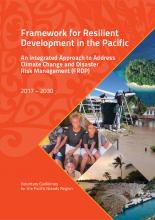
Framework for Resilient Development in the Pacific: An Integrated Approach to Address Climate Change and Disaster Risk Management (FRDP) 2017 - 2030
Climate Change Resilience, Biodiversity Conservation
Available Online
2016
Climate change exacerbates the magnitude and impacts of climate variability and some natural hazards. The existence of some Pacific Island countries (PICs) is threatened by climate change. Pacific Island countries and territories (PICTs) are highly exposed to a range of natural hazards of hydro-meteorological origin (such as cyclones, droughts, landslides and floods) and geological origin (including volcanic eruptions, earthquakes and tsunamis). These hazards often lead to disasters, which affect thousands of people and exacerbate existing development challenges in the region. Climate change predictions identify changes for the Pacific including an increase in extreme hot days and warm nights, extreme rainfall events, intensity of tropical cyclones in the South Pacific, sea level rise and ocean acidification. Climate change is increasing the risks from weather related disasters and posing new impacts to the region. Climate change impacts also cause progressive long-term degradation to the natural environment, to critical ecosystems (e.g. coral reefs), and to social and economic systems, resulting in loss and damage to the system upon which Pacific Island communities depend for their subsistence and livelihoods.
Preparatory Survey on the Project for Construction of Pacific Climate Change Centre in the Independent State of Samoa

Japan International Cooperation Agency (JICA)

2016
Small island countries, spread over the Pacific region, are extremely susceptible to natural disasters. Since concerns are growing that natural disaster may occur more frequently and become more intensified in the region in the future as climate change worsens, it is urgent and therefore important to establish a base inside the region and develop human resources in this field in order to respond to climate change and disaster prevention. Against this background, formulation of the "Strategy for Climate and Disaster Resilient Development in the Pacific (2017 to 2030)" is under way in the region led by international regional organizations and UNDP. The Secretariat of the Pacific Regional Environment Programme (hereinafter referred to as SPREP), the implementing body of the Project for Construction of Pacific Climate Change Centre, is an international agency established in 1993 by 26 countries and territories (including 14 island countries called Pacific Island Countries, or PICs) and the headquarters in Apia, the capital of Samoa. As one of the central agencies promoting regional-level efforts in the Pacific region for climate change, SPREP is making comprehensive efforts in the field, including the above development strategy, the formulation and implementation of climate change adaptation and mitigation measures in collaboration with donor agencies, and human resource development aimed at increasing its say on the international stage.