Search the SPREP Catalogue

Refine Search Results

Related Countries

Language

Available Online

Related Countries

Available Online

6 result(s) found.

Sort by

You searched for

Background Paper Number 2: The Potential for Ecosystem-based Adaptation (EbA) in the Pacific Islands.
BRB
Available Online
This report examines the role of the ecosystem services in reducing the vulnerability of the people of the Pacific Islands to climate change. Specifically, it describes the decision-making frameworks and the current state of knowledge of specific ecosystem-service/development relationships that are relevant to EbA. The primary objective of this work will inform broader recommendations on improving the integration of ecosystems, biodiversity and climate change adaptation under the Biodiversity, Ecosystems and Climate Change in the Pacific - Analysis and Needs Assessment Project(The Project) which is part of a collaboration between the Secretariat for the Pacific Regional Environment Programme (SPREP) and Conservation International and was undertaken from January to July 2011. This report should be considered as a companion volume to the other 3 background reports produced under the Project: Climate Change Adaptation Options for Species and Ecosystems in the Pacific: Background Paper #1; Need Analysis for Information on Ecosystem, Biodiversity and Climate Change Adaptation in the Pacific Islands Countries and Territories; Background Paper #3; Report on the Results Workshop from Nadi, 12-13 May 2011; Background Paper #4. The findings of each of these reports will be synthesized into a single, shorter volume that targets decision-makers in planning, agriculture, environment, fisheries and disaster management institutions in the Pacific. However, the audience for this EbA report (Background Paper #2) is technical staff in these institutions as it explores the next level of detail on EbA potential and practicalities of implementation.
Proceedings of the Helping Islands Adapt Workshop on regional action to combat invasive species on islands to preserve biodiversity and adapt to climate change, 11-16 April, 2010, Auckland, New Zealand
Biodiversity Conservation, BRB
Available Online

Sheppard, Brian

,

Singleton-Cambage, Krista

2010
The Helping Islands Adapt workshop was held in Auckland, New Zealand between the 11th and 16th of April 2010 to support regional action against invasive species on islands, in order to preserve biodiversity and adapt to climate change. It arose from decisions under the Convention on Biological Diversity (CBD) relating to invasive alien species and island biodiversity, and was hosted by the Government of New Zealand with support from a number of partner organisations and countries. The workshop focused on four major island regions: the Caribbean, Coral Triangle, Indian Ocean and Pacific, and involved participation by 82 people from 24 countries and territories, and 29 national, regional and international organisations (see participants list in Appendix 5). The workshop was specifically designed to allow for the maximum exchange of experience and support between representatives from diverse island regions working in invasive species management. It also included a field inspection of one of the Department of Conservation‘s invasive species management projects on Rangitoto Island in Auckland‘s Hauraki Gulf. The workshop built on efforts under the Cooperative Islands Initiative, a partnership launched at the World Summit for Sustainable Development and the CBD 6th Conference of the Parties in 2002. Its intended outputs had been agreed by the organiser‘s steering committee and set out as a 'road map‘ that was used to ensure clarity of the workshop‘s intended purpose, outputs and outcomes. An overview of the workshop, its sponsors, participants and conclusions was developed during the workshop and submitted to the 14th ?Subsidiary Body on Scientific Technical and Technological Advice (SBSSTA 14) to the Convention on Biological Diversity (CBD) in Nairobi 10-21 May 2010. That report is provided in full in Appendix 5 to these proceedings.
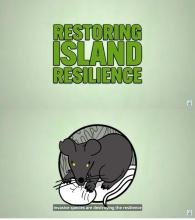
Eradicating Pacific rats (Rattus exulans) from Nu'utele and Nu'ulua Islands, Samoa - some of the challenges of operating in the tropcial Pacific
BRB
Available Online

Butler, D.J.

,

Tipamaa, F.T.

,

Tye, A.

,

Wylie, M.

2011
The restoration of the small offshore islands of Nu’utele (108ha) and Nu’ulua (25ha) has long been identified as a priority for biodiversity conservation in Samoa. The first step towards restoration was the aerial spreading of brodifacoum to eradicate Pacific rats (Rattus exulans) in August 2009. Procedures for the eradication followed those used in New Zealand and involved technical experts from that country. Particular challenges included a tight operational time-frame (two months), technical problems magnified by the remote location, variable reliability of weather forecasting,working with the local community, and mitigating rodenticide exposure risks for the friendly ground-dove (Gallicolumba stairi) (IUCN: vulnerable). Solutions to these challenges are discussed as guidance for similar projects in remote island locations. Follow-up monitoring between August 2009 and March 2010 indicated that the eradication had been successful, but Pacific rats were detected on Nu’utele in May 2011. Nu’ulua has yet to be rechecked in 2011. DNA analyses are being organised to determine if these rats are survivors or re-invaders.