Search the SPREP Catalogue

Refine Search Results

Tags / Keywords

Available Online

Tags / Keywords

Available Online

1485 result(s) found.

Sort by

You searched for

  • Subject Protected areas - Oceania
    X
Espaces et plateformes d'échanges régionaux sur les EEE - Fiche finale de capitalisation - PROTEGE
SPREP Publications, Biodiversity Conservation, BRB

PROE / SPREP

2025
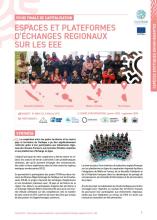
La coopération entre les quatre territoires et les autres pays et territoires du Pacifique a pu être significativement renforcée grâce à leur participation aux événements régionaux des réseaux d’acteurs, aux tournées d’études conjointes et aux plateformes d’échange en ligne. L’objectif principal de cette coopération a été de mettre en relation les acteurs de terrain confrontés à des problématiques similaires, afin qu’ils puissent échanger des connaissances, des outils et leurs expériences dans la lutte contre les espèces exotiques envahissantes (EEE). En permettant la participation des quatre PTOM aux deux réunions du Réseau d’Apprentissage du Pacifique sur les Envahissants (PILN), le projet a favorisé des échanges d’expériences et une émulation précieuse avec 18 pays et territoires de la région. Par ailleurs, la participation d’agents des territoires à un échange régional dédié à la biosécurité ainsi qu’à une tournée d’étude certifiante sur des compétences clés en matière de lutte contre les EEE a permis de tisser des liens par le biais de discussions et d’apprentissages communs. La mise en place d’une interface de traduction anglais/français sur les plateformes en ligne de coopération régionale facilitera l’intégration de Wallis-et-Futuna, de la Nouvelle-Calédonie et de la Polynésie française dans les dynamiques de partage de connaissances, de remontée d’informations et de structuration de projets. À la fin du projet, la mobilisation du Fonds Pacifique pourra être envisagée pour répondre au souhait des territoires français de poursuivre leur participation aux événements régionaux, tandis que leur intégration au réseau du PILN et l’accès aux ressources associées ont été pérennisés. FICHE FINALE DE CAPITALISATION DU PROJET PROTEGE, financé par l'Union Européenne.
Global Atlas of Marine Fisheries: A critical appraisal of catches and ecosystem impacts
Biodiversity Conservation

Pauly, Daniel (ed.)

,

Zeller, Dirk (ed.)

2016
Until now, there has been only one source of data on global fishery catches: information reported to the Food and Agriculture Organization of the United Nations by member countries. An extensive, ten-year study conducted by The Sea Around Us Project of the University of British Columbia shows that this catch data is fundamentally misleading. Many countries underreport the amount of fish caught (some by as much as 500%), while others such as China significantly overreport their catches. The Global Atlas of Marine Fisheries is the first and only book to provide accurate, country-by-country fishery data. This groundbreaking information has been gathered from independent sources by the world’s foremost fisheries experts, and edited by Daniel Pauly and Dirk Zeller of the Sea Around Us Project. The Atlas includes one-page reports on 273 countries and their territories, plus fourteen topical global chapters. National reports describe the state of the country's fishery, by sector; the policies, politics, and social factors affecting it; and potential solutions. The global chapters address cross-cutting issues, from the economics of fisheries to the impacts of mariculture. Extensive maps and graphics offer attractive and accessible visual representations. While it has long been clear that the world’s oceans are in trouble, the lack of reliable data on fishery catches has obscured the scale, and nuances, of the crisis. The atlas shows that, globally, catches have declined rapidly since the 1980s, signaling an even more critical situation than previously understood. The Global Atlas of Marine Fisheries provides a comprehensive picture of our current predicament and steps that can be taken to ease it. For researchers, students, fishery managers, professionals in the fishing industry, and all others concerned with the status of the world’s fisheries, the Atlas will be an indispensable resource.