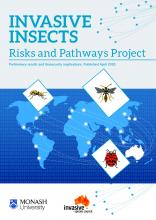
Invasive Insects: Risks and Pathways Project

BRB
Available Online
Australia cant afford to allow in any more insect colonists like red imported fire ants, electric ants, browsing ants, yellow crazy ants, Argentine ants, African big-headed ants, Asian honeybees, large earth bumblebees and German wasps. These invaders are costing both the Australian environment and economy dearly. Hundreds of millions of dollars are being spent on Australia-wide eradications of red fire ants, electric ants and browsing ants because of their potential for devastating harm to wildlife and impacts on people. The others have spread too far to remove, so are here in perpetuity as a threat to biodiversity, human amenity and the economy, and a burden for future generations to manage. Given the difficulties and costliness of eradicating or controlling invasive insects, one over-riding priority for Australian biosecurity must be to prevent more harmful species arriving and establishing. To do this, biosecurity authorities need to know which insects overseas (an estimated 46 million species) represent the greatest invasive risks for our country and how they are likely to arrive here. Biosecurity authorities already know which insects are the prevention priorities for agriculture, but there is no such list covering insects that could harm the Australian environment.