Search the SPREP Catalogue

6 result(s) found.

Sort by

You searched for

  • Publication Year 2012
    X
  • Publication Year 2005
    X
  • Organisation Secretariat of the Convention on Biological Diversity
    X
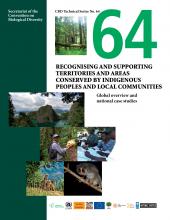
Recognising and Supporting Territories and Areas Conserved by Indigenous Peoples and Local Communities
Available Online

Corrigan, Colleen,

,

Jonas, Harry

,

Kothari, Ashish

,

Neumann, Aurélie

,

Shrumm, Holly (eds.)

2012
Indigenous peoples and local communities have managed and protected a variety of natural environments and species for a variety of reasons, cultural, spiritual and aesthetic, as well as socio-economic. Today, there are many thousands of indigenous territories and other areas conserved by indigenous peoples and local communities across the world. Indigenous peoples’ and local communities’ conserved territories and areas (ICCAs) are natural and/or modified ecosystems containing significant biodiversity values, ecological services and cultural values, voluntarily conserved by indigenous peoples and local communities, both sedentary and mobile, through customary laws or other effective means. They help maintain genetic diversity, conserve threatened species, and provide corridors for species’ movements. The cultural and economic livelihoods of millions of people depend on them for securing resources such as energy, food, water, fodder, shelter, clothing, and for providing income. ICCAs contribute to global food security by conserving important crop wild relatives, and traditional and threatened landraces. ICCAs play a critical role in ensuring access and respecting rights to customary sustainable use of biodiversity and also provide a fertile classroom for the passing on of inter-generational environmental knowledge, innovations and practices.
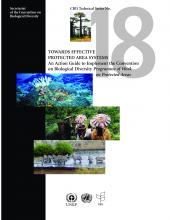
Towards effective Protected Area Systems. An action guide to implement the Convention on Biological Diversity Programme of Work on Protected Areas.
Available Online

Secretariat of the Convention on Biological Diversity

2005
The overall purpose of the Programme of Work on protected areas is to support the establishment and maintenance by 2010 for terrestrial and by 2012 for marine areas of comprehensive, effectively managed, and ecologically representative national and regional systems of protected areas that collectively, inter alia through a global network contribute to achieving the three objectives of the Convention and the 2010 target to significantly reduce the current rate of biodiversity loss at the global, regional, national and sub-national levels and contribute to poverty reduction and the pursuit of sustainable development, thereby supporting the objectives of the Strategic Plan of the Convention, the World Summit on Sustainable Development Plan of Implementation and the Millennium Development Goals. The Programme of Work identifies four programme elements, 16 goals (each with a more specific target) and 92 activities for the Parties, many of which have specific timetables. The Programme of Work on Protected Areas is one of the most ambitious global conservation programmes ever agreed. It may appear daunting to many governments. Many activities are linked and some overlap. While some actions need to be taken by every government, others can be addressed only once and the results shared. Countries will usually not start from zero: there is already a huge amount of relevant progress, along with experience, tools and data to draw from.