Search the SPREP Catalogue

Refine Search Results

Tags / Keywords

Tags / Keywords

9005 result(s) found.

Sort by

You searched for

  • Available Online Yes
    X
Approved Work Programme and Budget for 2008 and Indicative budgets for 2009 and 2010, 18th SPREP meeting, 11-14 September, 2007, Apia, Samoa
Available Online

Secretariat of the Pacific Regional Environment Programme (SPREP)

2007
The presentation of programmes and budget details starts with a brief introduction to the relevant programme describing its content and focus and stating its goal. A list of staff and positions (filled, vacant and unfunded) falling under each programme is provided to give members an idea of the human resources available to that particular programme and needed for programme delivery to complement the financial resources provided. The programme details are then displayed under each of its component parts that are linked directly to the Strategic Programmes. These include the component Objective. Outputs, Activities planned for 2008 that would contribute to delivering the Outputs, the Verifiable Indicators for the Activities and in the last column, the budget figures. For added transparency, this is broken down into Personnel. Operating and Capital Costs with the likely sources of funding identified. In instances where programme funding is unsecured, its inclusion in the budget estimates, is based on the firm understanding that a programme proposal has already been negotiated with a donor(s) and a positive response received so that there is at least a 50/50 chance of having the funds available for use in 2008. For the total 2008 Work Programme and Budget, 95% of the funding is secured and 5% unsecured.
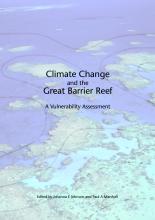
Climate Change and the Great Barrier Reef: a vulnerability assessment : a vulnerability assessment
Climate Change Resilience, Biodiversity Conservation
Available Online

E. Johnson, Johanna

,

Marshall, A. Paul

2007
The Great Barrier Reef is one of the truly majestic places on our planet. Its size and brilliance make is observable even from space. Few ocean areas are known as well globally as the 2,300 km of reefs that extend over the Australian east coast. Comprised of more than 2,900 individual reefs that form its foundation, the Great Barrier Reef World Heritage Area encompasses a diversity of habitats, plants and animals of outstanding universal value. Scattered throughout its footprint are islands, mangroves and marine life of infinite variety. Like the Galapagos, the Great Barrier Reef has singular characteristics found nowhere else on Earth But, all of this is under threat as never before. Global climate change is a virtual sword of Damocles hanging over the very heart of the Great Barrier Reef. History reveals that reefs have been faced with changes in the past, including fluctuations in water temperature, sea level and acidification. Climate change has accelerated this rate of change, coinciding with mounting pressure from human uses. These threats are certainly not unique to the Great Barrier Reef. Around the world, coral reefs are faced with impacts from poor water quality, overfishing, physical damage and climate change. Experts estimate that 20 percent of the world’s coral reefs have been effectively destroyed and show no prospect of recovery, another 24 percent are under imminent risk of collapse through human pressures and 26 percent more are under longer term threat. What makes the Great Barrier Reef unique is that, so far, it has remained in relatively good condition compared to other reefs around the world.