Search the SPREP Catalogue

Refine Search Results

Language

Available Online

Available Online

32 result(s) found.

Sort by

You searched for

  • Available Online Yes
    X
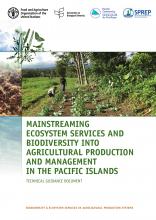
Mainstreaming Ecosystem Services and Biodiversity into Agricultural Production and Management in the Pacific Islands - Technical guidance document
Biodiversity Conservation
Available Online

FAO

2016
The international community is increasingly aware of the link between biodiversity and sustainable development and its direct impact on wealth, health and well-being. Biodiversity is the origin of all crops and domesticated livestock. It is also the source of vital ecosystem services and functions, including soil conservation, water cycling, pollination, pest and disease regulation, carbon sequestration and nitrogen fixation. Biodiversity and the ecosystem services it supports are thus key to nutritional diversity and to agricultural productivity and resilience. The Convention on Biological Diversity (CBD) Strategic Plan for Biodiversity 2011–2020 and its 20 Aichi Biodiversity Targets provide a framework for countries to develop national targets and policies for sustaining biodiversity for a healthy planet. To meet rising global food demands, agricultural systems need to produce greater quantities of more diverse and nutritious food in a sustainable way. This progress can and must be achieved without driving biodiversity loss. It must come through gains in the efficiency of resource use, through sustainable intensification and a landscape perspective in agricultural production. By contributing to the conservation and sustainable use of biodiversity, agriculture will be a key driver for eliminating poverty, improving human health and providing energy, food and clean water for all while maintaining natural ecosystems.
Recognising and Supporting Territories and Areas Conserved by Indigenous Peoples and Local Communities
Available Online

Corrigan, Colleen,

,

Jonas, Harry

,

Kothari, Ashish

,

Neumann, Aurélie

,

Shrumm, Holly (eds.)

2012
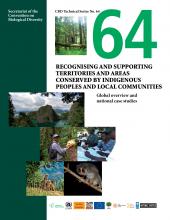
Indigenous peoples and local communities have managed and protected a variety of natural environments and species for a variety of reasons, cultural, spiritual and aesthetic, as well as socio-economic. Today, there are many thousands of indigenous territories and other areas conserved by indigenous peoples and local communities across the world. Indigenous peoples’ and local communities’ conserved territories and areas (ICCAs) are natural and/or modified ecosystems containing significant biodiversity values, ecological services and cultural values, voluntarily conserved by indigenous peoples and local communities, both sedentary and mobile, through customary laws or other effective means. They help maintain genetic diversity, conserve threatened species, and provide corridors for species’ movements. The cultural and economic livelihoods of millions of people depend on them for securing resources such as energy, food, water, fodder, shelter, clothing, and for providing income. ICCAs contribute to global food security by conserving important crop wild relatives, and traditional and threatened landraces. ICCAs play a critical role in ensuring access and respecting rights to customary sustainable use of biodiversity and also provide a fertile classroom for the passing on of inter-generational environmental knowledge, innovations and practices.