Search the SPREP Catalogue

Refine Search Results

Publication Year

Available Online

Publication Year

Available Online

4 result(s) found.

Sort by

You searched for

Dispositif de suivi de l'abondance et de l'impact du cerf - Fiche finale de capitalisation - PROTEGE
SPREP Publications, Biodiversity Conservation, BRB
Available Online

PROE / SPREP

2025
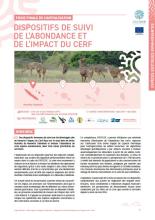
Des dispositifs innovants de suivi ont été développés afin de mesurer l’impact du Cerf Rusa sur le sous-bois de forêts humides de Nouvelle Calédonie et évaluer l’abondance de cette espèce envahissante, dans trois zones prioritaires du territoire. L’élaboration de ces dispositifs poursuit des objectifs complémentaires aux actions de régulation professionnelle mises en œuvre dans le cadre de PROTEGE. Le suivi vise notamment à réaliser un état initial et à évaluer les bénéfices des opérations de régulation, grâce à des outils adaptés à des zones d’intervention difficiles d’accès et caractérisées par une biodiversité exceptionnelle, plus de 80% des espèces végétales des forêts humides d’altitude étant endémiques à la Nouvelle-Calédonie. Un travail initial de sectorisation a permis mieux de caractériser les enjeux, les pressions sur l’environnement ainsi que le contexte socio-économique afin de délimiter les zones d’intervention prioritaires. Pour la première fois en Nouvelle-Calédonie, un protocole standardisé de mesure de l’impact des cerfs a été élaboré. Il s’appuie sur plusieurs indicateurs et prend en compte les spécificités des espèces végétales concernées et des contraintes associées à sa mise en œuvre. En complément, PROTEGE a permis d’élaborer une méthodeinnovante d’évaluation de l’abondance des cerfs, reposant sur l’utilisation d’un drone équipé de capteur thermique pour l’enregistrement de vidéos nocturnes. Un algorithme développé spécifiquement a par ailleurs vocation à réaliser automatiquement les détections à partir de ces vidéos, facilitant considérablement le traitement des données. La mise en œuvre de ce protocole pour la prospection de 4 700 hectares a révélé des densités de populations et des concentrations de hardes localement très élevées, atteignant par endroits des niveaux parmi les plus élevés enregistrés à l’échelle mondiale. Ces résultats fournissent des informations précieuses pour le ciblage de futures interventions et le suivi de leurs bénéfices. FICHE FINALE DE CAPITALISATION DU PROJET PROTEGE, financé par l'Union Européenne.
Pacific Islands Renewable Energy Project (PIREP) : a climate change-mitigating partnership of GEF, UNDP, SPREP and the Pacific Islands : project document
Climate Change Resilience, Biodiversity Conservation
Available Online

Pacific Islands Renewable Energy Project (PIREP)

,

Secretariat of the Pacific Regional Environment Programme (SPREP) (SPREP)

2002
The Pacific Island Countries (PICs) are currently heavily dependent on fossil fuels. Renewable energy (RE), mostly hydro, is estimated to contribute less than 10 percent of each PICs commercial energy use and the region is characterized by scattered and fragmented efforts to promote RE technologies that are based on unreliable and unsubstantiated data on RE resource potentials. The Pacific Islands Renewable Energy Project (PIREP) will facilitate the promotion within the PICs of the widespread implementation and ultimately, commercialisation of RE technologies (RETs) through the establishment of a suitable enabling environment. The establishment of an environment conducive to the region-wide adoption and commercialisation of RETs would involve the design, development and implementation of appropriate policies, strategies and interventions addressing the fiscal, financial, regulatory, market, technical and information barriers to RE development and utilization. It will also involve the development of interventions for strengthening of the relevant institutional structures and national capacity for the coordination and the sustainable management (design, implementation, monitoring, maintenance, evaluation and the marketing) of RE initiatives in each PIC. This Project Document has been revised to reflect minor changes suggested by SPREP at a meeting Friday the 6th of September 2002 between SPREP and UNDP to improve clarity concerning internal communications in SPREP between the CTA and the management level and external communications between SPREP and UNDP management levels. Refer to Part IV - Management Arrangements and the Terms of Reference in Appendix B. C.and D.