Skip to main content
SPREP on Facebook
SPREP on Twitter
SPREP on YouTube
SPREP on LinkedIn
Home
About us
Projects
Search
General Search
Advanced Search
Collections
Anamua: Treasures of the Pacific Environment
Ecosystem Based Adaptation
Gender
Live & Learn Environmental Education
Marine Species
Oceans
Research4Life (Peer-reviewed articles)
Samoa Conservation Society
Seabirds
Traditional Knowledge
Threatened and Migratory Species (TAMS)
Submit Publication
Log in
Search the SPREP Catalogue
Advanced Search
Refine Search Results
Collection
(-)
Climate Change Resilience
(36)
Biodiversity Conservation
(78)
BRB
(30)
Environmental Governance
(1)
SPREP Publications
(1)
Waste Management and Pollution Control
(1)
Related Countries
Pacific Region
(2)
Nauru
(1)
Worldwide
(1)
Tags / Keywords
invasive species
(21)
iucn red list
(21)
problem definition
(21)
problem definition-baseline
(21)
threatened and endangered
(21)
fiji
(4)
disaster risks
(3)
kiribati
(3)
nauru
(3)
samoa
(3)
tonga
(3)
vanuatu
(3)
vulnerability
(3)
climate change
(2)
climatic changes
(2)
cook islands
(2)
niue
(2)
palau
(2)
solomon islands
(2)
tuvalu
(2)
american samoa
(1)
climate change adaptation
(1)
federated states of micronesia
(1)
french polynesia
(1)
gender
(1)
guam
(1)
mariana islands
(1)
marshall islands
(1)
new caledonia
(1)
northern mariana islands
(1)
oceania
(1)
pacific
(1)
papua new guinea
(1)
protected areas
(1)
sacred dimensions
(1)
tokelau
(1)
wallis and futuna
(1)
Author
(-)
IUCN
(30)
PACC
(89)
SPREP
(89)
Secretariat of the Pacific Regional Environment Programme (SPREP)
(84)
UNEP
(27)
Wade, Herbert
(19)
IPCC
(17)
,
(15)
Secretariat of the Pacific Community (SPC)
(14)
Secretariat of the Pacific Regional Environment Programme (SPREP) (SPREP)
(14)
Hay, John E.
(13)
Subsidiary Body for Scientific and Technological Advice (Second session : Geneva : 1996)
(12)
GEF Pacific Ridge to Reef Programme
(11)
Nakalevu, Taito
(11)
United Nations Environment Programme
(11)
Subsidiary Body for Implementation (Second session : Geneva : 1996)
(10)
Garnaut, Ross
(9)
Global Environment Facility
(9)
UNDP
(9)
Organisation
International Union for Nature Conservation (IUCN)
(27)
Applied Geoscience and Technology Division (SOPAC) of SPC
(4)
Department of Environment (DOE)
(2)
Department of Environmental Protection & Conservation (Vanuatu)
(1)
Ministry of Environment and Climate Change (Tonga)
(1)
SOPAC/NIWA
(1)
SOPAC/UNEP/GEF/UNDP/Cook Island
(1)
The World Conservation Union (IUCN)
(1)
Language
English
(36)
Publication Year
2017
(1)
2016
(1)
2010
(1)
2009
(23)
2007
(2)
1999
(1)
Material Type
Summary
(21)
Report
(5)
Brief
(2)
Environmental Impact Assessment
(2)
Brochure
(1)
Proposal
(1)
Available Online
Yes
(28)
No
(8)
Collection
(-)
Climate Change Resilience
(36)
Biodiversity Conservation
(78)
BRB
(30)
Environmental Governance
(1)
SPREP Publications
(1)
Waste Management and Pollution Control
(1)
Related Countries
Pacific Region
(2)
Nauru
(1)
Worldwide
(1)
Tags / Keywords
invasive species
(21)
iucn red list
(21)
problem definition
(21)
problem definition-baseline
(21)
threatened and endangered
(21)
fiji
(4)
disaster risks
(3)
kiribati
(3)
nauru
(3)
samoa
(3)
tonga
(3)
vanuatu
(3)
vulnerability
(3)
climate change
(2)
climatic changes
(2)
cook islands
(2)
niue
(2)
palau
(2)
solomon islands
(2)
tuvalu
(2)
american samoa
(1)
climate change adaptation
(1)
federated states of micronesia
(1)
french polynesia
(1)
gender
(1)
guam
(1)
mariana islands
(1)
marshall islands
(1)
new caledonia
(1)
northern mariana islands
(1)
oceania
(1)
pacific
(1)
papua new guinea
(1)
protected areas
(1)
sacred dimensions
(1)
tokelau
(1)
wallis and futuna
(1)
Author
(-)
IUCN
(30)
PACC
(89)
SPREP
(89)
Secretariat of the Pacific Regional Environment Programme (SPREP)
(84)
UNEP
(27)
Wade, Herbert
(19)
IPCC
(17)
,
(15)
Secretariat of the Pacific Community (SPC)
(14)
Secretariat of the Pacific Regional Environment Programme (SPREP) (SPREP)
(14)
Hay, John E.
(13)
Subsidiary Body for Scientific and Technological Advice (Second session : Geneva : 1996)
(12)
GEF Pacific Ridge to Reef Programme
(11)
Nakalevu, Taito
(11)
United Nations Environment Programme
(11)
Subsidiary Body for Implementation (Second session : Geneva : 1996)
(10)
Garnaut, Ross
(9)
Global Environment Facility
(9)
UNDP
(9)
Organisation
International Union for Nature Conservation (IUCN)
(27)
Applied Geoscience and Technology Division (SOPAC) of SPC
(4)
Department of Environment (DOE)
(2)
Department of Environmental Protection & Conservation (Vanuatu)
(1)
Ministry of Environment and Climate Change (Tonga)
(1)
SOPAC/NIWA
(1)
SOPAC/UNEP/GEF/UNDP/Cook Island
(1)
The World Conservation Union (IUCN)
(1)
Publication Year
2017
(1)
2016
(1)
2010
(1)
2009
(23)
2007
(2)
1999
(1)
Material Type
Summary
(21)
Report
(5)
Brief
(2)
Environmental Impact Assessment
(2)
Brochure
(1)
Proposal
(1)
Available Online
Yes
(28)
No
(8)
36 result(s) found.
Sort by
Publication Year
Sort results by
Created
Sort results by
Updated
Sort results by
You searched for
Author
IUCN
X
Collection
Climate Change Resilience
X
clear
IUCN Issues Brief (November, 2017)
Climate Change Resilience, Biodiversity Conservation
Available Online
IUCN
2017
Marine Protected Areas (MPAs) are areas of the ocean set aside for long-term conservation aims.| MPAs support climate change adaptation and mitigation while providing other ecosystem services.| Currently 6.35% of the ocean is protected, but only just over 1.89% is covered by exclusively no-take MPAs.| Most existing MPAs do not have enough human and financial resources to properly implement conservation and management measures.| Increased political commitments can help boost the governance of and resources available to MPAs.
Integrating gender considerations in National Biodiversity Strategies and Action Plans - Pilot project process and initial considerations
Climate Change Resilience
IUCN
2016
There are opportunities to capture more experience from initiatives at the local level, which can support objectives of the NBSAP and strengthen national reporting. Further research on gender and biodiversity can usefully build on the knowledge base on gender and environment themes, and gender and climate change in particular. Research and sharing of experience are also needed to promote and strengthen understanding and awareness of the relevance of gender to biodiversity conservation and sustainable use in the nation context.
gender
2010 PACC Cook Geospatial Framework SOPAC Proposal
Climate Change Resilience
Available Online
SOPAC
2010
This proposal has been prepared by the Ocean and Islands Programme (OIP) within the Pacific Islands Applied Geoscience Commission (SOPAC) in collaboration with the National Institute of Water and Atmospheric Research (NIWA). It has been prepared in response to an invitation1 from the Secretariat of the Pacific Regional Environment Programme (SPREP) to assist the Cook Islands in deriving coastal related information to underpin and inform climate change adaptation decisions for coastal areas of Mangaia Island.
SOPAC member countries national capacity assessments: tsunami warning and mitigation systems : Samoa, Tuvalu, Niue, PNG, Cook Islands, Fiji, Solomon Islands, FSM, Palau, Nauru, Tonga, Kiribati, Marshall Islands & Vanuatu
Climate Change Resilience
Available Online
SOPAC
2009
samoa
solomon islands
tonga
vanuatu
palau
cook islands
fiji
kiribati
nauru
niue
tuvalu
The sacred dimension of protected areas: proceedings of the Second workshop of the Delos Initiative - Ouranoupolis 2007
Climate Change Resilience, Biodiversity Conservation
Available Online
IUCN
2009
As environmental problems continue to increase at an ever more rapid rate, exacerbated by the major threat of global climate change, the need for widespread remedial action is becoming ever more pressing. Scientific consensus on both the root causes of these problems and the measures required to tackle them is growing, while mass media and public interest has reached fever pitch. Of course, while this has put pressure on decisionmakers to take positive action, the realisation of the gravity and extent of the environmental problems has encouraged all those concerned about the state of our world to search for partners around it: one such significant partnership to emerge in recent years is between those concerned with the conservation of nature and of its biodiversity and the custodians of sacred sites, representing both indigenous beliefs and mainstream faiths.
protected areas
sacred dimensions
Tuvalu : summary of species on the 2008 IUCN Red List
Climate Change Resilience, Biodiversity Conservation, BRB
Available Online
IUCN
2009
The Pacific islands of Oceania cover almost 15% of the world's surface and are characterised by a high degree of ecosystem and species diversity. The region is characterised by thousands of isolated small coral atolls and higher volcanic islands, which has led to the high diversity of species found today. In fact, the number of plants and animals found nowhere else on earth (endemic species) is extremely high - often up to 90% for particular groups. Often, these rare and endemic species are adapted to specialised habitats and limited to small areas of a few islands. With economic and cultural dependence on the natural environment very high in the Pacific islands, along with a rapidly expanding human population, there are ever increasing demands on the region's natural resources. Plant and animal species are therefore vulnerable to extinction from climate change, competition from introduced (invasive) species and human impacts such as habitat destruction, over-harvesting of species and pollution.
invasive species
iucn red list
tuvalu
problem definition
problem definition-baseline
threatened and endangered
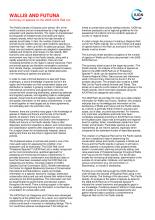
Vanuatu : summary of species on the 2008 IUCN Red List
Climate Change Resilience, Biodiversity Conservation, BRB
Available Online
IUCN
2009
The Pacific islands of Oceania cover almost 15% of the world's surface and are characterised by a high degree of ecosystem and species diversity. The region is characterised by thousands of isolated small coral atolls and higher volcanic islands, which has led to the high diversity of species found today. In fact, the number of plants and animals found nowhere else on earth (endemic species) is extremely high - often up to 90% for particular groups. Often, these rare and endemic species are adapted to specialised habitats and limited to small areas of a few islands. With economic and cultural dependence on the natural environment very high in the Pacific islands, along with a rapidly expanding human population, there are ever increasing demands on the region's natural resources. Plant and animal species are therefore vulnerable to extinction from climate change, competition from introduced (invasive) species and human impacts such as habitat destruction, over-harvesting of species and pollution.
invasive species
vanuatu
iucn red list
problem definition
problem definition-baseline
threatened and endangered
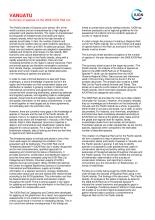
Wallis and Futuna: summary of species on the 2008 IUCN Red List
Climate Change Resilience, Biodiversity Conservation, BRB
Available Online
IUCN
2009
The Pacific islands of Oceania cover almost 15% of the world's surface and are characterised by a high degree of ecosystem and species diversity. The region is characterised by thousands of isolated small coral atolls and higher volcanic islands, which has led to the high diversity of species found today. In fact, the number of plants and animals found nowhere else on earth (endemic species) is extremely high - often up to 90% for particular groups. Often, these rare and endemic species are adapted to specialised habitats and limited to small areas of a few islands. With economic and cultural dependence on the natural environment very high in the Pacific islands, along with a rapidly expanding human population, there are ever increasing demands on the region's natural resources. Plant and animal species are therefore vulnerable to extinction from climate change, competition from introduced (invasive) species and human impacts such as habitat destruction, over-harvesting of species and pollution.
invasive species
iucn red list
wallis and futuna
problem definition
problem definition-baseline
threatened and endangered
Tokelau: summary of species on the 2008 IUCN Red List
Climate Change Resilience, Biodiversity Conservation, BRB
Available Online
IUCN
2009
The Pacific islands of Oceania cover almost 15% of the worlds surface and are characterised by a high degree of ecosystem and species diversity. The region is characterised by thousands of isolated small coral atolls and higher volcanic islands, which has led to the high diversity of species found today. In fact, the number of plants and animals found nowhere else on earth (endemic species) is extremely high - often up to 90% for particular groups. Often, these rare and endemic species are adapted to specialised habitats and limited to small areas of a few islands. With economic and cultural dependence on the natural environment very high in the Pacific islands, along with a rapidly expanding human population, there are ever increasing demands on the regions natural resources. Plant and animal species are therefore vulnerable to extinction from climate change, competition from introduced (invasive) species and human impacts such as habitat destruction, over-harvesting of species and pollution.
invasive species
iucn red list
tokelau
problem definition
problem definition-baseline
threatened and endangered
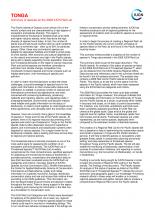
Tonga: summary of species on the 2008 IUCN Red List
Climate Change Resilience, Biodiversity Conservation, BRB
Available Online
IUCN
2009
The Pacific islands of Oceania cover almost 15% of the world's surface and are characterised by a high degree of ecosystem and species diversity. The region is characterised by thousands of isolated small coral atolls and higher volcanic islands, which has led to the high diversity of species found today. In fact, the number of plants and animals found nowhere else on earth (endemic species) is extremely high - often up to 90% for particular groups. Often, these rare and endemic species are adapted to specialised habitats and limited to small areas of a few islands. With economic and cultural dependence on the natural environment very high in the Pacific islands, along with a rapidly expanding human population, there are ever increasing demands on the region's natural resources. Plant and animal species are therefore vulnerable to extinction from climate change, competition from introduced (invasive) species and human impacts such as habitat destruction, over-harvesting of species and pollution.
tonga
invasive species
iucn red list
problem definition
problem definition-baseline
threatened and endangered
Pagination
Current page
1
Page
2
Page
3
Page
4
Next page
››
Last page
Last »
Login