SPREP on Facebook
SPREP on Twitter
SPREP on YouTube
SPREP on LinkedIn
Home
About us
Projects
Search
General Search
Advanced Search
Collections
Anamua: Treasures of the Pacific Environment
Ecosystem Based Adaptation
Gender
Live & Learn Environmental Education
Marine Species
Oceans
Research4Life (Peer-reviewed articles)
Samoa Conservation Society
Seabirds
Traditional Knowledge
Threatened and Migratory Species (TAMS)
Submit Publication
Log in
Search the SPREP Catalogue
Advanced Search
Refine Search Results
Collection
Climate Change Resilience
(98)
Biodiversity Conservation
(5)
BRB
(1)
SPREP Publications
(1)
Related Countries
Tonga
(1)
Tags / Keywords
fiji
(33)
climate change
(15)
climatic changes
(13)
disaster risks
(13)
vulnerability
(13)
nauru
(11)
federated states of micronesia
(5)
samoa
(5)
tonga
(5)
cook islands
(4)
niue
(4)
oceania
(4)
pacc
(4)
pacific
(4)
palau
(4)
tuvalu
(4)
vanuatu
(4)
papua new guinea
(3)
solomon islands
(3)
tokelau
(3)
republic of the marshall islands
(2)
foundations - legislation, policy, and protocols
(1)
gef 6 rip
(1)
gender
(1)
kingdom of tonga
(1)
Legislation, Policy, Protocols
(1)
national invasive species strategy and action plan (NISSAP)
(1)
Problem definition, Prioritisation, Decision-making
(1)
problem definition, prioritization and decision-making
(1)
Author
(-)
PACC
(90)
SPREP
(433)
Secretariat of the Pacific Regional Environment Programme (SPREP)
(413)
UNEP
(321)
International programme on chemical safety
(201)
Secretariat of the Pacific Regional Environment Programme (SPREP) (SPREP)
(197)
United Nations Environment Programme
(168)
IUCN
(121)
Secretariat of the Pacific Regional Environment Programme
(111)
John Schenk
(99)
Forum Secretariat
(98)
United Nations Environment Programme (UNEP)
(97)
Secretariat of the Pacific Community
(96)
United Nations
(88)
Asian Development Bank
(85)
Global Environment Facility
(79)
International Maritime Organization
(78)
South Pacific Commission
(68)
et al
(61)
Organisation
Secretariat of the Pacific Regional Environment Programme (SPREP)
(89)
Pacific Adaptation to Climate Change Programme (PACC)
(85)
Commonwealth of Australia
(9)
UNDP/GEF
(2)
GEF/UNDP
(1)
Government of Cook Islands/ UNDP/GEF/AusAID
(1)
NIWA
(1)
NIWA/GEF/UNDP/SPC
(1)
UNDP/GEF/AusAID
(1)
UNDP/GEF/AusAID/NIWA/SPC/National Environment Services/Government of Cook Islands
(1)
UNDP/GEF/Government of Cook Islands
(1)
Language
English
(100)
Publication Year
2023
(1)
2015
(1)
2014
(2)
2012
(23)
2011
(32)
2010
(18)
2009
(9)
2008
(8)
2007
(3)
2006
(2)
Material Type
Report
(97)
DVD
(3)
Review
(1)
Available Online
Yes
(86)
No
(14)
Collection
Climate Change Resilience
(98)
Biodiversity Conservation
(5)
BRB
(1)
SPREP Publications
(1)
Related Countries
Tonga
(1)
Tags / Keywords
fiji
(33)
climate change
(15)
climatic changes
(13)
disaster risks
(13)
vulnerability
(13)
nauru
(11)
federated states of micronesia
(5)
samoa
(5)
tonga
(5)
cook islands
(4)
niue
(4)
oceania
(4)
pacc
(4)
pacific
(4)
palau
(4)
tuvalu
(4)
vanuatu
(4)
papua new guinea
(3)
solomon islands
(3)
tokelau
(3)
republic of the marshall islands
(2)
foundations - legislation, policy, and protocols
(1)
gef 6 rip
(1)
gender
(1)
kingdom of tonga
(1)
Legislation, Policy, Protocols
(1)
national invasive species strategy and action plan (NISSAP)
(1)
Problem definition, Prioritisation, Decision-making
(1)
problem definition, prioritization and decision-making
(1)
Author
(-)
PACC
(90)
SPREP
(433)
Secretariat of the Pacific Regional Environment Programme (SPREP)
(413)
UNEP
(321)
International programme on chemical safety
(201)
Secretariat of the Pacific Regional Environment Programme (SPREP) (SPREP)
(197)
United Nations Environment Programme
(168)
IUCN
(121)
Secretariat of the Pacific Regional Environment Programme
(111)
John Schenk
(99)
Forum Secretariat
(98)
United Nations Environment Programme (UNEP)
(97)
Secretariat of the Pacific Community
(96)
United Nations
(88)
Asian Development Bank
(85)
Global Environment Facility
(79)
International Maritime Organization
(78)
South Pacific Commission
(68)
et al
(61)
Organisation
Secretariat of the Pacific Regional Environment Programme (SPREP)
(89)
Pacific Adaptation to Climate Change Programme (PACC)
(85)
Commonwealth of Australia
(9)
UNDP/GEF
(2)
GEF/UNDP
(1)
Government of Cook Islands/ UNDP/GEF/AusAID
(1)
NIWA
(1)
NIWA/GEF/UNDP/SPC
(1)
UNDP/GEF/AusAID
(1)
UNDP/GEF/AusAID/NIWA/SPC/National Environment Services/Government of Cook Islands
(1)
UNDP/GEF/Government of Cook Islands
(1)
Publication Year
2023
(1)
2015
(1)
2014
(2)
2012
(23)
2011
(32)
2010
(18)
2009
(9)
2008
(8)
2007
(3)
2006
(2)
Material Type
Report
(97)
DVD
(3)
Review
(1)
Available Online
Yes
(86)
No
(14)
100 result(s) found.
Sort by
Publication Year
Sort results by
Created
Sort results by
Updated
Sort results by
You searched for
Author
PACC
X
clear
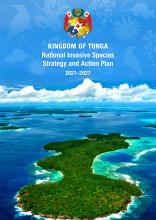
Kingdom of Tonga National Invasive Species Strategy and Action Plan (NISSAP) 2021-2027
SPREP Publications, BRB
Available Online
MEIDECC Tonga
2023
The NISSAP is a tool aligned with the Guidelines for Invasive Species Management in the Pacific that identifies the strategy and key actions to effectively prevent, manage and reduce the impacts of invasive species to the environment, our economy, culture and health and well-being in Tonga.
tonga
kingdom of tonga
gef 6 rip
problem definition, prioritization and decision-making
Problem definition, Prioritisation, Decision-making
Legislation, Policy, Protocols
national invasive species strategy and action plan (NISSAP)
foundations - legislation, policy, and protocols
Vital Access (PACC Video) Federated States of Micronesia
Climate Change Resilience, Biodiversity Conservation
PACC
,
SPREP
2015
federated states of micronesia
Vital Health (PACC) Tokelau
Climate Change Resilience, Biodiversity Conservation
PACC
,
SPREP
2014
tokelau
Vital Coast (PACC) Samoa
Biodiversity Conservation
PACC
,
SPREP
2014
samoa
Pacific Adaptation to Climate Change (PACC) Project 3rd Multipartite Review Meeting 2012; UNDP, SPREP, AusAID, Cook Islands, Federated States of Micronesia (FSM), Republic of the Marshall Islands (RMI), Nauru, Niue, Fiji, Palau, Papua New Guinea (PNG), Samoa, Solomon Islands, Tonga, Tokelau, Tuvalu, Vanuatu, Gender Assessment, Mid Term Review
Climate Change Resilience
Available Online
PACC
2012
PACC reports
samoa
pacific
oceania
climate change
solomon islands
tonga
vanuatu
palau
federated states of micronesia
cook islands
fiji
nauru
niue
papua new guinea
tokelau
tuvalu
pacc
republic of the marshall islands
vulnerability
gender
climatic changes
disaster risks
Garnaut Climate Change Review - Update 2011. Update Paper seven: Low emissions technology and the innovation challenge
Climate Change Resilience
Garnaut, Ross
2011
It is in our national interest to play its proportionate part in the world meeting what is now a goal that has been agreed by the international community: reducing global emissions to an extent that holds temperature increases to below 2 degrees Celsius. Australia has more to lose than any other developed country if this goal is not achieved. Australia has naturally a highly emissions-intensive economy, currently with far higher emissions per capita than any other developed country. Most other developed countries now have falling or steady emissions but, largely as a result of the contemporary resources boom, our emissions continue to increase rapidly. The naturally high emissions intensity of Australian production would not be a particular issue if there were deep international trade in entitlements generating comparable carbon prices over much of the global economy: unavoidable emissions costs would be embedded in international product prices, and Australia may be a large exporter of emissions-intensive products, and a large number of entitlements to emit greenhouse gasses.
climate change
vulnerability
climatic changes
disaster risks
Garnaut Climate Change Review - Update 2011. Update Paper eight: Transforming the electricity sector
Climate Change Resilience
Garnaut, Ross
2011
It is in our national interest to play its proportionate part in the world meeting what is now a goal that has been agreed by the international community: reducing global emissions to an extent that holds temperature increases to below 2 degrees Celsius. Australia has more to lose than any other developed country if this goal is not achieved. Australia has naturally a highly emissions-intensive economy, currently with far higher emissions per capita than any other developed country. Most other developed countries now have falling or steady emissions but, largely as a result of the contemporary resources boom, our emissions continue to increase rapidly. The naturally high emissions intensity of Australian production would not be a particular issue if there were deep international trade in entitlements generating comparable carbon prices over much of the global economy: unavoidable emissions costs would be embedded in international product prices, and Australia may be a large exporter of emissions-intensive products, and a large number of entitlements to emit greenhouse gasses.
climate change
vulnerability
climatic changes
disaster risks
Garnaut Climate Change Review - Update 2011. Update Paper six: Carbon pricing and reducing Australia's emissions
Climate Change Resilience
Garnaut, Ross
2011
It is in our national interest to play its proportionate part in the world meeting what is now a goal that has been agreed by the international community: reducing global emissions to an extent that holds temperature increases to below 2 degrees Celsius. Australia has more to lose than any other developed country if this goal is not achieved. Australia has naturally a highly emissions-intensive economy, currently with far higher emissions per capita than any other developed country. Most other developed countries now have falling or steady emissions but, largely as a result of the contemporary resources boom, our emissions continue to increase rapidly. The naturally high emissions intensity of Australian production would not be a particular issue if there were deep international trade in entitlements generating comparable carbon prices over much of the global economy: unavoidable emissions costs would be embedded in international product prices, and Australia may be a large exporter of emissions-intensive products, and a large number of entitlements to emit greenhouse gasses.
climate change
vulnerability
climatic changes
disaster risks
Garnaut Climate Change Review - Update 2011. Update Paper five: The science of climate change
Climate Change Resilience
Garnaut, Ross
2011
I have been deeply immersed in many dimensions of the climate change question for almost four years, since I was commissioned in April 2007 by all of the State and Territory Governments and then by the Commonwealth Government as well to the undertake 2008 Garnaut Climate Change Review. At the commencement of the Review, I faced the question that confronts all who are not climate scientists and who are required for one reason or another to take a position on the climate science: how do we know if propositions put forward by some climate scientists are right? I began with some general awareness of the issues (derived in part from my association with the International Food Policy Research Institute in Washington, which was undertaking research on the effects of climate change and its mitigation on global food security), but with no strong view and no more than a common knowledge of climate change science. I did not know how strongly the main propositions of climate change science were held in the mainstream science community. I was aware of sceptical views and set out to understand them.
climate change
vulnerability
climatic changes
disaster risks
Garnaut Climate Change Review - Update 2011. Update Paper one: Weighing the cost and benefits of climate change action
Climate Change Resilience
Garnaut, Ross
2011
This is the first of eight update papers that will focus on new developments and consider whether the case for the conclusions drawn in 2008 has been strengthened or weakened. Individual papers will examine progress on: international mitigation efforts; global emissions trends; the climate science; opportunities for abatement in the land sector and biosequestration; proposals for reducing emissions, including different carbon price instruments; technology developments and innovation policy; and the electricity sector.
climate change
vulnerability
climatic changes
disaster risks
Pagination
Current page
1
Page
2
Page
3
Page
4
Page
5
Page
6
Page
7
Page
8
Page
9
…
Next page
››
Last page
Last »
Login