Search the SPREP Catalogue

Refine Search Results

Related Countries

Language

Available Online

Related Countries

Available Online

6 result(s) found.

Sort by

You searched for

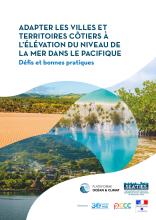
Adapter les villes et territoires côtiers à l’élévation du niveau de la mer dans le Pacifique : défis et bonnes pratiques.
SPREP Publications, Climate Change Resilience, Biodiversity Conservation
Available Online

Devignol, Lisa ... et al.

2024
Ce rapport est l'un des principaux résultats de l'atelier régional Sea'ties Pacifique qui s'est tenu du 10 au 12 juillet 2023 à Nadi (Fidji). L'atelier a été organisé par la Plateforme Océan & Climat, le Programme régional océanien de l'environnement (PROE), et le Pacific Climate Change Pacifique (PCCC), avec le soutien financier du Fonds de coopération économique, sociale et culturelle pour le Pacifique (« Fonds Pacifique », Ministère de l’Europe et des Affaires Etrangères), du PCCC, et du PROE par le biais du programme d’assistance technique de l’Initiative Kiwa. Le rapport fournit une vue d'ensemble des défis actuels en matière d'adaptation dans la région du Pacifique, ainsi que des initiatives inspirantes pour les relever. Les conclusions de ce rapport s'appuient sur les points de vue exprimés lors d’entretiens et sur les discussions de l'atelier lui-même. Il souligne et démontre à quel point, dans une région où de nombreuses îles sont de faible altitude, où la grande majorité de la population vit au bord de l'océan et où la côte s'urbanise rapidement, l'élévation du niveau de la mer reste une question existentielle et qu'il est primordial d'accélérer les mesures d'atténuation et d'adaptation.
Risk of marine spills in the Pacific Islands region and its evolving response arrangements, Spillcon Conference, Sydney, 16-20 September, 2002
Biodiversity Conservation, Waste Management and Pollution Control, Anamua: Treasures of the Pacific Environment
Available Online

Gilbert, Trevor

,

Nawadra, Sefanaia

2002
Assisting the South Pacific Regional Environment Programme's (SPREP) island members to plan, prepare and respond to marine spills is one of the four activity areas of the Pacific Ocean Pollution Prevention Programme (PACPOL). PACPOL activities currently include a regional risk assessment regional and national contingency plans, formulation of a regional equipment strategy and facilitating regular workshop to discuss marine spill issues. The aim of this initial shipping risk study was to identify and quantify the shipping routes, frequency of voyages and types of cargoes transported in the region as well as to map shipping incidents, navigational hazards and assess the risk of marine pollution across the region, EEZs and at a port scale. The regional and EEZ distribution of risk potential showed clusters of high risk in Fiji, French Polynesia, Papua New Guinea and Solomon Islands. Smaller clusters occurred in Tonga, the Samoa's, Vanuatu and the corridor from Chuuk northward past Guam and the Northern Mariana Islands. Another potential marine pollution risk for the Pacific is the fuel oil and cargoes remaining on WWII shipwrecks deteriorating in the waters of the region. More than 1000 such wrecks have been identified amounting to over 3 million tons of shipping lost.