Search the SPREP Catalogue

Refine Search Results

Available Online

Available Online

115 result(s) found.

Sort by

You searched for

  • Author Forum Secretariat
    X
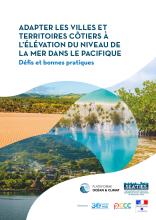
Adapter les villes et territoires côtiers à l’élévation du niveau de la mer dans le Pacifique : défis et bonnes pratiques.
SPREP Publications, Climate Change Resilience, Biodiversity Conservation
Available Online

Devignol, Lisa ... et al.

2024
Ce rapport est l'un des principaux résultats de l'atelier régional Sea'ties Pacifique qui s'est tenu du 10 au 12 juillet 2023 à Nadi (Fidji). L'atelier a été organisé par la Plateforme Océan & Climat, le Programme régional océanien de l'environnement (PROE), et le Pacific Climate Change Pacifique (PCCC), avec le soutien financier du Fonds de coopération économique, sociale et culturelle pour le Pacifique (« Fonds Pacifique », Ministère de l’Europe et des Affaires Etrangères), du PCCC, et du PROE par le biais du programme d’assistance technique de l’Initiative Kiwa. Le rapport fournit une vue d'ensemble des défis actuels en matière d'adaptation dans la région du Pacifique, ainsi que des initiatives inspirantes pour les relever. Les conclusions de ce rapport s'appuient sur les points de vue exprimés lors d’entretiens et sur les discussions de l'atelier lui-même. Il souligne et démontre à quel point, dans une région où de nombreuses îles sont de faible altitude, où la grande majorité de la population vit au bord de l'océan et où la côte s'urbanise rapidement, l'élévation du niveau de la mer reste une question existentielle et qu'il est primordial d'accélérer les mesures d'atténuation et d'adaptation.
First draft Kiribati mid-term review/progress on implementation of the Brussels POA of LDCs (2001-2010) : "Expert group meeting, 14-16 February 2006, Phnom Penh
Biodiversity Conservation
Available Online

Government of Kiribati

2006
Kibarti is a small country in the central Pacific comprised of 33 low-lying atolls barely 2-3 meters high above sea level. The population of 84,494 (2000 Census) is mainly young that lives on a total land area of 810sq. km a vast ocean area of 3.5 million sq.km. The country has limited physical resources and relies heavily on fish and copra as the mainstay of the economy. Economic growth is thereby only 2-3 percent (real GDP) per annum on average driven mainly from the copra sector, construction, wholesale/retail, and government administration. Gratefully, growth is underpinned by foreign earnings and ODA from government and international financial institutions. The former comprises net factor income from abroad thaqt includes returns from the reserve fund and other foreign reserves, remittances, and fishing license fees. Government is the major provider of cash employment (2 out of every 3 employees) that contributes significantly to a relatively high level of its current budget each year. Fiscal policy is therby the major policy instrument of government as the use of the Australian currency precludes monetary policy and likewise the lack of export and other economic and geographical disadvantages prevent trade and other related policies. Given such economic and physical disadvantages and also the volatilities/vulnerabilities of some economic strengths already mentioned, Kiribati definitely cannot live and develop o its own but truly needs to be party to development at a regional and international levels.