Search the SPREP Catalogue

Refine Search Results

Language

Available Online

Available Online

18 result(s) found.

Sort by

You searched for

  • Author Asian Development Bank
    X
  • Collection Biodiversity Conservation
    X
Trail cameras are a key monitoring tool for determining target and non-target bait-take during rodent removal operations: evidence from Desecheo Island rat eradication
Biodiversity Conservation
Available Online

Figuerola-Hernandez, C.

,

Samra, C.

,

Shiels, A.B.

,

Silander, S.

,

Swinnerton, K.J.

,

Will, D.

,

Witmer, G.W.

2019
Efforts to remove invasive rodents (e.g. Rattus spp. and Mus musculus) from islands often use toxicant-laced baits containing the anticoagulants brodifacoum or diphacinone. Rodenticide baits are generally delivered through aerial- or hand-broadcast, or in bait stations. These baits are not rodent-species and are subject to non-target consumption or secondary exposure (e.g. an individual preying upon another individual that has consumed bait). During rodenticide applications, it is generally unknown which animals are visiting and consuming bait; and to quantify this, we recommend using trail cameras (e.g. Reconyx™ motion-activated infra-red) positioned to monitor individual bait pellets. To demonstrate the importance and effectiveness of using trail cameras during such operations, we report results of target (Rattus rattus, black rat) and non-target (native land crab, lizard, insect) bait-interactions after an aerial-broadcast of Brodifacoum-25D Conservation to eradicate rats from Desecheo Island, Puerto Rico. During the ?rst ?ve days following bait application, trail cameras (n = 15) revealed that there were 40 incidences of animals contacting bait pellets: 50% rat, 32% hermit crab, 13% Ameiva lizard, and 5% insect. Trail cameras provide temporal and spatial information regarding the e?ectiveness of rodent removal, and the last rat pictured by trail cameras on Desecheo was six days after bait application began. Trail cameras revealed 30 incidences of animals contacting bait pellets 6–20 days after bait application began: 47% hermit crab, 37% Ameiva lizard, 13% insect, and 3% black crab. Despite viewing ~69,000 images from trail cameras, lizards were never pictured consuming bait on Desecheo; therefore, any brodifacoum exposure to Desecheo lizards likely occurred via secondary pathways (e.g. consumption of contaminated insects). Scaling up, we estimate that > 75% of the total bait distributed on Desecheo was not consumed by rats. Trail cameras help inform the hazards of rodenticide use and can be easily incorporated into rodent removal operations.
Considerations and consequences when conducting aerial broadcast applications during rodent eradications
Biodiversity Conservation, BRB
Available Online

Gill, C.

,

Griffi ths, R.

,

Holmes, N.

,

Howald, G.

,

Will, D.

2019
Aerial broadcast application is currently one of the most common methods for conducting rodent eradications on islands, particularly islands greater than 100 ha or with complex and difficult topography where access by ground teams is difficult. Overall, aerial broadcast applications have a high success rate, but can be burdened by logistical, regulatory, and environmental challenges. This is particularly true for islands where complex shorelines, sheer terrain, and the interface with the marine environment pose additional risks and concerns. Using data collected during ten eradication projects we investigate the influence that operational realities have on broadcast applications. We tested the association between the amount of bait used and island size, topography, and the desire to reduce bait application into the marine environment and then compared planned bait application to actual bait application quantities. Based on our results, islands of decreasing size and increasing coastal complexity tended to use more bait than anticipated and experienced greater variability in localised bait densities. During operations, we recommend analysing flight data to identify treated areas with localised bait densities that fall below the target application rate. We recommend that areas with low localised bait densities may result in biologically significant gaps that should receive an additional application of bait based on project risk variables such as target home range size, non-target bait competitors, and alternative foods. We also recommend a common language for discussing aerial broadcast applications and where future work can be done to improve operational decision making.
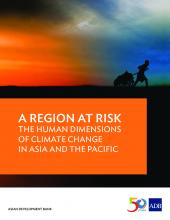
A region at risk - The human dimensions of climate change in Asia and the Pacific
Climate Change Resilience, Biodiversity Conservation
Available Online

Asian Development Bank

2017
The Asia and Pacific region is extremely vulnerable to the impacts of climate change. Unabated warming could significantly undo previous achievements of economic development and improvements of living standards. At the same time, the region has both the economic capacity and weight of influence to change the present fossil-fuel based development pathway and curb global emissions. This report sheds light on the regional implications of the latest projections of changes in climate conditions over Asia and the Pacific. The assessment concludes that, even under the Paris consensus scenario in which global warming is limited to 1.5°C to 2°C above preindustrial levels, some of the land area, ecosystems, and socioeconomic sectors will be significantly affected by climate change impacts, to which policy makers and the investment community need to adapt to. However, under a Business-As-Usual (BAU) scenario, which will cause a global mean temperature rise of over 4°C by the end of this century, the possibilities for adaptation are drastically reduced. Among others, climate change impacts such as the deterioration of the Asian “water towers”, prolonged heat waves, coastal sea-level rise and changes in rainfall patterns could disrupt ecosystem services and lead to severe effects on livelihoods which in turn would affect human health, migration dynamics and the potential for conflicts. This assessment also underlines that, for many areas vital to the region’s economy, research on the effects of climate change is still lacking.