Search the SPREP Catalogue

Refine Search Results

25 result(s) found.

Sort by

You searched for

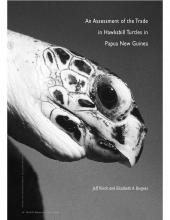
An assessment of the trade in Hawksbill turtles in Papua New Guinea
Available Online

Burgess Elizabeth A

,

Kinch Jeff

2009
The trade in Hawksbill Turtles Eretmochelys imbricata, medium-sized cheloniids with a pan-tropical distribution, has been recognized as a key threat to their conservation in the wild, and has greatly contributed to the species being listed as Critically Endangered in the IUCN Red List (Milliken and Tokunaga, 1987; Groombridge and Luxmoore, 1989; Meylan and Donnelly, 1999; van Dijk and Shepherd, 2004; TRAFFIC Southeast Asia Indo china, 2004; Bräutigam and Eckert, 2006; Mortimer and Donnelly, 2007; IUCN, 2009). Sought after for its thick keratinous shell plates (often referred to as bekko or tortoiseshell), eggs, and sometimes meat, unsustainable harvest levels have endangered the Hawksbill Turtle throughout its distribution. Declines in populations in the Pacific have been widely reported (Hirth, 1971; Witzell and Banner, 1980; Pritchard, 1982; Balazs, 1983; Witzell, 1983; Johannes, 1986; Groombridge and Luxmoore, 1989; Miller, 1994; NMFS and USFWS, 1998; Meylan and Donnelly, 1999; Mortimer and Donnelly, 2007). Hawksbill Turtles and their eggs are widely used in Papua New Guinea for a variety of purposes, including subsistence, sale, barter (Spring, 1980, 1981, 1982a,b,c; Pernetta and Hill, 1981; Wright and Richards, 1983; Kinch, 1999, 2002, 2003a; Koczberski et al., 2006) and for celebrations at Christmas and the end of the school year, which coincide with the peak turtle nesting period in the austral summer months (Kwan, 1994; Kinch, 1999, 2002, 2003a). In many areas of Papua New Guinea, Hawksbill Turtles are also opportunistically taken as ‘by-catch’ by fishers out on the reefs targeting lobsters, shellfish and sea cucumbers.
Mainstreaming climate change in ADB's operations: climate change implementation plan for the Pacific Islands 2009-2015 Part 1: main report : Consultation draft; Part 2: Appendices, consultation draft
Climate Change Resilience, Biodiversity Conservation
Available Online

ADB

2009
This Climate Change Implementation Plan (CCIP) for the Pacific Regional Department (PARD) of the Asian Development Bank (ADB) describes the areas of focus for PARD's operations and identifies key gaps between country and ADB actions, as well as opportunities for scaling up ADB's assistance related to mitigation, adaptation and associated cross-cutting needs. This gap analysis points to recommended interventions in regional and country programs for additional technical assistance (TA) and financial assistance, including access to new climate funds and adoption of new financing mechanisms. These include multi-donor Climate Investment Funds (Clean Technology Fund and Strategic Climate Fund), ADB's Future Carbon Fund, and possibly a new Sustainable Fuel Credits mechanism to promote reduced petroleum consumption. The CCIP will evolve through periodic updates in order to effectively guide ongoing and future programs and TA and project design. Going forward, specific climate change interventions will continue to be incorporated into the Country Partnership Strategy (CPS) and Country Operations Business Plan (COBP) for each Pacific Developing Member Country (PDMC) and into the Regional Operations Business Plan (ROBP) for the Pacific region as a whole. TA and investment projects will be designed, taking into consideration regional and country variations in governance, institutional capacity, and geographic and local environmental conditions.