Search the SPREP Catalogue

Refine Search Results

23 result(s) found.

Sort by

You searched for

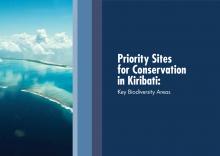
Priority Sites for Conservation in Kiribati: Key Biodiversity Areas
Biodiversity Conservation
Available Online

Anderson, P.

,

van Dijken, S. G.

2013
In 2010, under Kiribati’s Programme of Work for Protected Areas (PoWPA), a national ecological gap analysis (GA) was conducted. Its main purpose was to assess how effective the current Protected Areas (PA) network was at achieving Kiribati’s National Biodiversity Strategies Action Plan (NBSAP) conservation targets, and in particular to identify priority areas for the expansion of the PA network and priority actions for improved management of existing PAs. A complementary objective was to identify the key gaps in our knowledge of the country’s biodiversity. The Secretariat of the Pacific Regional Environment Programme (SPREP) and Conservation International’s Pacific Islands Program (CI-PIP) provided technical support to the Kiribati Ministry of Environment, Lands and Agricultural Development (MELAD) to conduct a GA of Key Biodiversity Areas (KBA – areas of high biodiversity and conservation value) in Kiribati, and provided advisory support for its PA network design. The KBA approach was applied at the archipelago (Gilbert, Line and Phoenix Islands) level combining terrestrial, coastal and lagoon habitats. The KBA methodology applied here is based on an international standard methodology that focuses on worldwide threatened species. KBA sites – all designated at the island level - were identified based on the presence of globally threatened species. The KBA sites (Islands) were then prioritized based on three additional criteria including the frequency of species of local concern as identified by the NBSAP, Kiribati Adaptation Plan (KAP) II mangroves, and the PoWPA phase one consultations; areas of expert concern; and a habitat metric based on habitat diversity and numerical analysis of habitat types.
Mainstreaming climate change in ADB's operations: climate change implementation plan for the Pacific Islands 2009-2015 Part 1: main report : Consultation draft; Part 2: Appendices, consultation draft
Climate Change Resilience, Biodiversity Conservation
Available Online

ADB

2009
This Climate Change Implementation Plan (CCIP) for the Pacific Regional Department (PARD) of the Asian Development Bank (ADB) describes the areas of focus for PARD's operations and identifies key gaps between country and ADB actions, as well as opportunities for scaling up ADB's assistance related to mitigation, adaptation and associated cross-cutting needs. This gap analysis points to recommended interventions in regional and country programs for additional technical assistance (TA) and financial assistance, including access to new climate funds and adoption of new financing mechanisms. These include multi-donor Climate Investment Funds (Clean Technology Fund and Strategic Climate Fund), ADB's Future Carbon Fund, and possibly a new Sustainable Fuel Credits mechanism to promote reduced petroleum consumption. The CCIP will evolve through periodic updates in order to effectively guide ongoing and future programs and TA and project design. Going forward, specific climate change interventions will continue to be incorporated into the Country Partnership Strategy (CPS) and Country Operations Business Plan (COBP) for each Pacific Developing Member Country (PDMC) and into the Regional Operations Business Plan (ROBP) for the Pacific region as a whole. TA and investment projects will be designed, taking into consideration regional and country variations in governance, institutional capacity, and geographic and local environmental conditions.