Search the SPREP Catalogue

Refine Search Results

Tags / Keywords

Available Online

Tags / Keywords

Available Online

327 result(s) found.

Sort by

You searched for

  • Subject Tuna
    X
Climate change vulnerability assessment of species
Climate Change Resilience, BRB
Available Online

Akçakaya, H. Resit

,

Bickford, David

,

Carr, Jamie A.

,

Foden, Wendy B.

,

Garcia, Raquel A.

,

Hoffmann, Ary A.

,

Hole, David G.

,

Huntley, Brian

,

Martin, Tara G.

,

Pacifici, Michela

,

Pearce‐Higgins, James W.

,

Platts, Philip J.

,

Stein, Bruce A.

,

Thomas, Chris D.

,

Visconti, Piero

,

Watson, James E. M.

,

Wheatley, Christopher J.

,

Young, Bruce E.

2018
Assessing species' vulnerability to climate change is a prerequisite for developing effective strategies to conserve them. The last three decades have seen exponential growth in the number of studies evaluating how, how much, why, when, and where species will be impacted by climate change. We provide an overview of the rapidly developing field of climate change vulnerability assessment (CCVA) and describe key concepts, terms, steps and considerations. We stress the importance of identifying the full range of pressures, impacts and their associated mechanisms that species face and using this as a basis for selecting the appropriate assessment approaches for quantifying vulnerability. We outline four CCVA assessment approaches, namely trait?based, correlative, mechanistic and combined approaches and discuss their use. Since any assessment can deliver unreliable or even misleading results when incorrect data and parameters are applied, we discuss finding, selecting, and applying input data and provide examples of open?access resources. Because rare, small?range, and declining?range species are often of particular conservation concern while also posing significant challenges for CCVA, we describe alternative ways to assess them. We also describe how CCVAs can be used to inform IUCN Red List assessments of extinction risk. Finally, we suggest future directions in this field and propose areas where research efforts may be particularly valuable.
The state of agricultural dommodity markets 2018. agricultural trade, climate change and food security
Environmental Governance, Climate Change Resilience, BRB
Available Online
2018
This edition of The State of Agricultural Commodity Markets focuses on the complex and underexplored intersection between agricultural trade, climate change and food security. It is clear that we cannot tackle hunger without finding adaptation and mitigation solutions to climate change in agriculture and food systems. It is also clear that the uneven impact of climate change across regions and countries, and the corresponding changes in food availability and access will affect international trade patterns and trade routes. This report supports these discussions by providing an in-depth analysis of the Paris Agreement and the WTO agreements to enhance clarity and provide guidance on policy options that could strengthen the mutually supportive role of these accords in tackling climate change and hunger. Wide-ranging policy actions are necessary to ensure that trade will contribute to the efforts aimed at ensuring food security and promoting adaptation and mitigation to climate change. The uneven impact of climate change across the world and its implications for agricultural trade, especially for developing countries, underlines the need for a balanced approach to policies, which should enhance the adaptive role of trade, while supporting the most vulnerable.
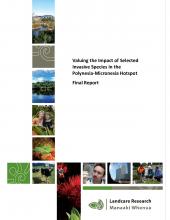
Valuing the impact of selected invasive species in the Polynesia-Micronesia hotspot, final report
BRB
Available Online

Aalbersberg, Bill

,

Boudjelas, Souad

,

Brown, Pike

,

Daigneault, Adam

,

Greenhalgh, Suzie

,

Mather, John

,

Nagle, William

2013
Invasive species pose an enormous threat in the Pacific: not only do they strongly affect biodiversity, but they also potentially affect the economic, social, and cultural wellbeing of Pacific peoples. Invasive species can potentially be managed and that their impacts can potentially be avoided, eliminated, or reduced. However, neither the costs nor the numerous benefits of management are well understood in the Pacific. Thus, the goals of this project were: A) to account for both the costs and benefits of managing invasive species; B) to prepare empirically grounded advocacy materials to help increase investment in the management of invasive species; C) to help governments prioritise investment in managing these species; and D) to build capability for undertaking economic assessments in the future. To accomplish these goals, we undertook cost-benefit analyses (CBAs) of managing five species that are well established on Viti Levu, Fiji: spathodea campanulata (African tulip tree), herpestus javanicus (small Asian mongoose), papuana uninodis (taro beetle), pycnonotus cafer (red-vented bulbul), and merremia peltata (merremia vine). Next, we conducted a comprehensive training programme on the CBA for invasive species management for professionals from the Pacific. Third, we collaborated with Pacific organisations to develop a uniform guide to conducting CBAs with numerous examples from the region. We also designed a flexible Microsoft Excel-based tool for conducting CBAs, enabling professionals who did not attend the training course to nevertheless undertake rigorous CBAs on invasive spsecies management. Finally, we developed advocacy material and publicised findings from this project to promote investment in invasive species management. This report details these activities in turn. It also includes numerous appendices that include the tools, guidance documents, and advocacy materials developed under this project.