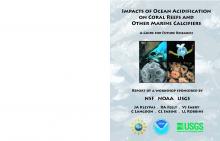
Impacts of Ocean acidification on coral reefs and other marine calcifiers: a guide for future research

Biodiversity Conservation
Available Online
Kleypas JA, Feely RA, Fabry VJ, Langdon C, Sabine CL, Robbins LL
2006
Research findings of the past decade have led to mounting concern that rising atmospheric carbon dioxide (CO2) concentrations will cause changes in the oceans carbonate chemistry system, and that those changes will affect some of the most fundamental biological and geochemical processes of the sea. Thanks to the efforts of large-scale physical and biogeochemical ocean programs such as WOCE, JGOFS, and OACES, ocean-wide changes in the carbonate system are now well documented. Since 1980 ocean uptake of the excess CO2 released by anthropogenic activities is significant; about a third has been stored in the oceans. The rate of atmospheric CO2 increase, however, far exceeds the rate at which natural feedbacks can restore the system to normal conditions. Oceanic uptake of CO2 drives the carbonate system to lower pH and lower saturation states of the carbonate minerals calcite, aragonite, and high-magnesium calcite, the materials used to form supporting skeletal structures in many major groups of marine organisms.