Search the SPREP Catalogue

Refine Search Results

Available Online

Available Online

736 result(s) found.

Sort by

You searched for

  • Subject Report
    X
  • Subject Environment
    X
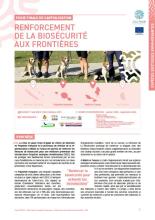
Lutte contre les espèces végétales envahissantes et gestion de la biodiversité - Fiches finales de capitalisation - PROTEGE
SPREP Publications, Biodiversity Conservation, BRB
Available Online

PROE / SPREP

2025
Des actions de lutte contre les espèces végétales envahissantes et de restauration de la biodiversité ont été menées sur le site UNESCO de Taputapuātea, situé sur l’île de Raiatea en Polynésie française. En valorisant le lien entre les patrimoines naturel et culturel, le projet a impulsé une dynamique de gestion écologique visant à renforcer la flore indigène, voire endémique. Grâce au travail de coordination d’un écologue présent sur le site pendant quatre ans, les actions de sensibilisation et de formation ont permis la montée en compétence et un engagement accru des communautés locales. Sur la base d’un travail de prospection de la biodiversité locale et des espèces envahissantes présentes, des actions de retrait ont été menées sur quatre espèces végétales cibles avant de procéder à la réinstallation de plants patrimoniaux. Un travail de valorisation d’un site restauré a également été réalisé par une association locale, avec l’aménagement d’un sentier pédagogique. Aujourd’hui, les acteurs locaux disposent de compétences renforcées et peuvent s’appuyer sur les équipements et serres fournis afin de poursuivre la production de plants patrimoniaux. La révision du plan de gestion du site UNESCO pourra ainsi bénéficier de leurs capacités, tandis que des financements ponctuels pourraient soutenir des actions à court terme. FICHE FINALE DE CAPITALISATION DU PROJET PROTEGE, financé par l'Union Européenne.
Paris Climate Agreement: Beacon of Hope
Available Online

Ross J. Salawitch, Timothy P. Canty, Austin P. Hope, Walter R. Tribett, Brian F. Bennett

2017
On 11 November 2014, a remarkable event occurred. President Barack Obama of the United States and President Xi Jinping of China announced a bilateral agreement to reduce the emission of greenhouse gases (GHGs) that cause global warming by their respective nations. On 12 December 2015, a year and a month later, representatives of 195 countries attending the 21st Conference of the Parties of the United Nations Framework Convention on Climate Change meeting in Paris, France, announced the Paris Climate Agreement. The goal of the Paris Climate Agreement is to limit the future emission of GHGs such that the rise in global mean surface temperature will be no more than 1.5 °C (target) or 2.0 °C (upper limit) above the pre-industrial level. The Paris Climate Agreement utilizes an approach for reducing the emissions of GHGs that is distinctly different than earlier efforts. The approach for Paris consists of a series of Intended Nationally Determined Contributions (INDCs), submitted by the world’s nations, reflecting either a firm commitment (unconditional INDCs) or a plan contingent on financial and/or technological support (conditional INDCs). The Obama–Xi announcement was instrumental in the framing of the Paris Climate Agreement. The INDCs submitted by the USA and China were built closely upon the November 2014 bilateral announcement. China and the USA rank number one and two, respectively, in terms of national emission of GHGs. Practically speaking, unified global action to combat global warming required these two nations to get on the same page.
The Interconnected Arctic — UArctic Congress 2016
Available Online

Kirsi Latola, Hannele Savela

2017
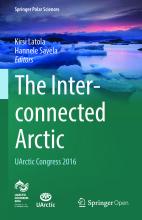
The chapters of this book are derived from the UArctic Congress 2016 science sessions, focusing on themes identified in the report of the International Conference on Arctic Research Planning (ICARP III) that was published in 2015. Themes address the changes and developments as well as the challenges and opportunities that are taking place in today’s global world. The Arctic is changing faster than any other region in the world. Its climate is changing in a speed that cannot be found anywhere else, affecting either directly or indirectly to almost everyone and everything. How can the Arctic societies and cultures, ecosystems, and environments cope with these fast changes? This book is divided into six thematic parts reflecting the congress themes: Vulnerability of the Arctic Environments, Vulnerability of the Arctic Societies, Building the Long-Term Human Capacity, Arctic Safety, and Arctic Tourism. The final part of the book “Circumpolar, Inclusive and Reciprocal Arctic” looks at the Arctic in the light of the UArctic’s mission and values; Gunhild Hoogensen Gjørv, professor of political sciences, addresses a number of issues surrounding the implementation of gender perspectives in the Arctic research, and Ulunnguaq Markussen, UArctic Student Ambassador, calls for an Arctic awakening of peoples in the era when Arctic is seen as a place for natural resource extraction and economic benefits.