Search the SPREP Catalogue

Refine Search Results

Language

Available Online

Available Online

6 result(s) found.

Sort by

You searched for

  • Related Countries Worldwide
    X
  • Subject Climate change
    X
  • Subject Environment - Protection - Samoa
    X
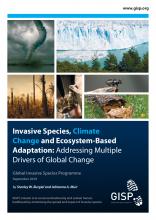
Invasive species, climate change and ecosystem-based adaptation: addressing multiple drivers of global change
Climate Change Resilience, BRB
Available Online

Burglele Stanley W.

,

Muir Adrianna A

2010
This report is targeted at policy-makers, particularly those responsible for developing climate mitigation and adaption strategies that address issues like conservation, ecosystem services, agriculture and sustainable livelihoods. It focuses on the primary linkages between invasive species and climate change, as well as the secondary and tertiary interactions of their corresponding impacts. Finally, the enclosed recommendations are intended to provide guidance on the best ways to integrate invasive species prevention and management into the consideration of climate change responses across a range of sectors. Building on a review of existing scientific and conservation literature (which is frequently centered on well-studied invasive species in developed countries), our research has reaffirmed that there are significant gaps and questions about the intersection of these two major drivers of change. The case studies included below highlight key relationships and questions related to invasive species, climate change and the role of ecosystem-based adaptation. The three key messages that can be distilled from this report are: 1. Climate change will have direct and second order impacts that facilitate the introduction, establishment and/or spread of invasive species. 2.Invasive species can increase the vulnerability of ecosystems to other climate-related stressors and also reduce their potential to sequester greenhouse gasses. 3.Using an ecosystem-based adaptation approach, these pressures on ecosystems and their ability to provide important services can be offset by preventing the introduction of new invasive species and by eradicating or controlling those damaging species already present.
Coral Reefs: An english compilation of Activities for middle School Students
Available Online

?

1997
The breathtakingly beautiful coral reefs of the world cover less than a half of one percent of our planet's sea floor. And yet, these magnificent underwater empires are home to an estimated 25 percent of all oceanic species, a dazzling diversity of sea creatures. Like the teeming metropolis of Rome, a coral reef "was not built in a day."Rather, the coral heads in a reef grow at a painstakingly slow average rate of half an inch per year and require epochs of geological time to amass into reefs and coral cays.Coral reefs, in addition to providing food and shelter for countless varieties of marine life, provide benefits beyond estimation for humankind. Healthy reefs aree ssential for an adequate supply of seafood to nourish the world's populations and sustain regional fishing industries. Reefs enhance tourist businesses by attracting millions of divers and by continuously supplying coastal beaches with shimmering white sand, the fine-grained rubble of dead corals and calcareous reef algae. By breaking waves, reefs protect nearby shorelines from soil and sand erosion and from the brunt of ravaging hurricanes. A wealth of commercial and medical applications has been discovered for corals and other components of the reef community. From coral reefs come additives for cement and mortar, compounds used in violin varnishes, substances for surgically replacing broken human bones, and promising treatments for infections,viruses, arthritis, asthma, and cancer. Scientists agree that this is only the tip of the iceberg as far as important findings and innovations which will result from continued research of coral reefs.