Search the SPREP Catalogue

Refine Search Results

Language

Available Online

Available Online

60 result(s) found.

Sort by

You searched for

  • Publication Year 2007
    X
  • Subject Protected areas - Management
    X
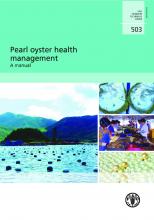
Pearl oyster health management : a manual
Biodiversity Conservation
Available Online

Berthe Franck C.J.

,

Bondad-Reantaso, Melba

,

McGladdery Sharon E.

2007
The pearl oysicr industry is a growing multibillion dollar sector of mollusc aquaculture. Pearl farming occurs throughout Australasia, the Middle East and South America. Few species of molluscs possess the ability to produce pearls of gem quality. The South Sea pearl oyster is one of them. Pearl production in the wild is an unpredictable and uncontrolled event which human intervention, through pearl culture, has progressively overcome by improving culture practices. Farming mother-of-pearls shares commonalties with edible mollusc aquaculture. However, the endproduct, pearl production, is unique to this sector. In aquatic production, health issues are of utmost importance; pearl production is based entirely upon health. The pearl itself is a product of the oyster's immune defences as a response to soli-tissui irritation. Exploited stocks receive frequent handling stresses which often predispose farmed animals to inlection and diseases. Therefore, the importance o! health management for pearl oysters is paramount. Today, most disease problems are caused by opportunistic pathogens taking advantage of oysters weakened by the stress of handling, including pearl surgery and sub-optimal growing conditions. Except for the mass mortalities experienced in Japan, the pearl oyster industry have not yet laced the types ot epizootics which has impacted mollusc culture elsewhere in the world. Development of the industry will, inevitably, lead to increased risk of disease introduction, spread or emergence. Against such an unwanted future, health management is the critical defence line.
Post-Tsunami assessment of Zinoa marine conservation area, South Choiseul, Solomon Islands
Biodiversity Conservation
Available Online

Hamilton Richard, Ramohia Peter, Hughes Alec, Siota Catherine, etc

2007
The waters surrounding Choiseul contain some of the highest diversities of coral and reef fish in the world, with the 2004 Solomon Island Marine Assessment showing that the Solomon Islands are part of the global centre for marine diversity known as the Coral Triangle. Other countries that make up the Coral Triangle are Indonesia, Philippines, parts of Malaysia, East Timor and Papua New Guinea. Since 2004 The Nature Conservancy (TNC), the Lauru Land Conference of Tribal Community (LLCTC) and Choiseul provincial fisheries have assisted five local communities around Choiseul in their efforts to establish Marine Conservation Areas (MCA) on their traditional reefs. The first MCA to be established was the Zinoa MCA. Zinoa is located on the south-west side of Choiseul in the Solomon Islands. The Zinoa MCA was established by traditional leaders in November 2004, covering 150 hectares and consisting of two islands and associated reefs that occur approximately one kilometre offshore from Voza village on the Choiseul mainland. The reefs around Zinoa Islands are representative of this region of the South coast of Choiseul. In early 2005 sea cucumbers, trochus and giant clams around Zinoa Islands were reported by traditional reef owners to be only a tiny fraction of their former abundance and food fish populations were also reported to be in decline.