Search the SPREP Catalogue

Refine Search Results

Tags / Keywords

Available Online

Tags / Keywords

Available Online

477 result(s) found.

Sort by

You searched for

  • Publication Year 2020
    X
  • Publication Year 1908
    X
Links between ecological integrity, emerging infectious disease and other aspects of human health - an overview of the literature
Available Online

Evans, T. Olson, S. Watson, J. et al

2020
Environmental degradation has significantly altered ecological systems worldwide and continues to expand into new areas. Majority of infectious disease threars are zoonotic and often cause a major social and economic impacts. Ecological degradation by humans increases overall emerging zoonotic disease risks. The increased risk results from multiple interacting pathways including increased human contact with pathogens and disruption in pathogen ecology. Degradation of ecosystem also has complex effects, feedback loops and some notable negative impacts on many other aspects of human health, including; the prevalence of long established (endemic0 zoonotic diseases, vector-borne and water-borne diseases; air quality, nutrition, menatl health and access to traditional medicines as well as effects on human health through the impacts of climate change. In avoiding environmental degradation (by keeping ecosystems as intact as poddible and avoid creation of high risk interface zones and high risk activities that increases human wildlife contact), combined with broader One Health approaches that address the full range of risk factors, will help to reduce risk to humanity from emerging zoonoses and can have othe beneficial health outcomes as well. Hence protecting ecological integrity should be a a proority action within any comprehensive plan to avoid future zoonotic outbreaks, alongside other critical measures such as addressing the wildlife trade, building surveillance and response system providing global access to health care and mitigating disease risks associated with domestic animals.
Promoting sustainable and inclusive oceans management in Pacific Islands through women and science.
Available Online

Michalena, Evanthie

,

Morris, Cherie W.

,

Singh, Priyatma

,

Straza, Tiffany R.A.

2020
The question of how to efficiently and effectively manage ocean resources in a sustainable way, has reached therefore front of discussion at an international level, but women's contributions to this process have been under-estimated or unrecognized. Inclusive management plays a major role in the effective creation, use and adoption of environmental governance, necessitating efforts to measure, monitor and advance inclusivity. In many Pacific island states, there is a lack of disaggregated data collection and management to assist reliable and liable gender-responsive decision-making by national and regional authorities. This lack of information leads to unquantified female contributions and unexplored potential for women to actively contribute to sustainable ocean management as traditional leaders, researchers or science-based managers and in accordance with traditional customs, cultures and processes. This paper examines the contribution of gender-disaggregated data in both (1) effective management of natural resources and (2) measurement and monitoring of the active involvement of women in ocean management. We seek to shift the question from simply “(How)are oceans used by women?” to “How can we build a clear path towards inclusive oceans management using science?”, drawing data mainly from gender and ocean management practices in Pacific Small Island Developing States. This work also seeks to ground in reality the increasing national and international evocations about social equity and avoidance of gender discrimination. Given the existing relationships of Pacific peoples with the ocean and the emerging status of ocean science-based governance, wider integration of science and women in marine management can make an interesting and positive impact in this region
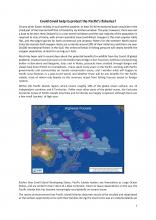
Could COVID-19 help to protect the Pacific's fisheries?
Biodiversity Conservation
Available Online

Donoghue, Michael

2020
In mist of the COVID-19 pandemic, less fishing boats have been seen on the ocean. This enforces break in fishing, pressure will clearly benefit the snapper population as it is the most popular table fish for both commercial and amateur fishers for northern North Island in New Zealand. Much have been said about the potential benefits for wildlife from the COVID-19 global epidemic; some of the endangered species have come out of hiding and are seen in some cities in countries that on the lockdown eg. coyotes have been seen on the Golden Gate Bridge in San Francisco, wild boar are becoming more bolder in Barcelona and Bergamo and many other animals that have temporarily inhabit cities that are on the lockdown. Instead of Small Island Developments States, Pcaific Islands leaders see themselves as Large Ocean States and are unitied in their vision of a Blue Continent. Since the Pacific Island contain most of the world's most valuable tuna fishery and is worth USD 40 billions, it is seen that some foreigner fishing boats have been illegally fishing in the economic zone of the Pacific Regions. This is why the UN Convention on the Law of the Sea has proved to be inadequate to enable sustainable management of fish stocks. The Organisation Global FIshing Watch tracks the movements of hundereds and thousands of fishing vessels around the world. It may be possible in a post-COVID world to achieve more sustainale global fisheries including in the Pacific Island, if nations agree on the need for better monitoring and management effort. Let's hope that enough decision-makers are able to implement some serious conservations measures in the coming months, before everyone sinks back into full-tilt exploitation of the ocean and it resources.