Search the SPREP Catalogue

Refine Search Results

Related Countries

Language

Available Online

Related Countries

Available Online

93 result(s) found.

Sort by

You searched for

  • Author PACC
    X
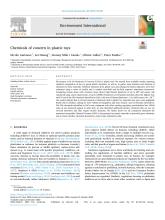
Chemicals of Concern in Plastic toys
Waste Management and Pollution Control
Available Online

Aurisano, Nicolò

,

Fantke, Peter

,

Huang, Lei

,

Jolliet, Olivier

,

Milà i Canals, Llorenç

2020
We present a list of Chemicals of Concern (CoCs) in plastic toys. We started from available studies reporting chemical composition of toys to group plastic materials, as well as to gather mass fractions and function of chemicals in these materials. Chemical emissions from plastic toys and subsequent human exposures were then estimated using a series of models and a coupled near-field and far-field exposure assessment framework. Comparing human doses with reference doses shows high Hazard Quotients of up to 387 and cancer risk calculated using cancer slope factors of up to 0.0005. Plasticizers in soft plastic materials show the highest risk, with 31 out of the 126 chemicals identified as CoCs, with sum of Hazard Quotients > 1 or child cancer risk > 10􀀀 6. Our results indicate that a relevant amount of chemicals used in plastic toy materials may pose a non-negligible health risk to children, calling for more refined investigations and more human- and eco-friendly alternatives. The 126 chemicals identified as CoCs were compared with other existing regulatory prioritization lists. While some of our chemicals appear in other lists, we also identified additional priority chemicals that are not yet covered elsewhere and thus require further attention. We finally derive for all considered chemicals the maximum Acceptable Chemical Content (ACC) in the grouped toy plastic materials as powerful green chemistry tool to check whether chemical alternatives could create substantial risks.
Quantification and magnitude of losses and damages resulting from the impacts of climate change: modelling the transformational impacts and costs of sea level rise in the Caribbean
Climate Change Resilience
Available Online

Simpson, M.C...[et al.]

2010
The inextricable links between climate change and sustainable development have been increasingly recognised over the past decade. In 2007, the Intergovernmental Panel on Climate Change (IPCC)1 concluded with very high confidence that climate change would impede the ability of many nations to achieve sustainable development by mid-century and become a security risk that would steadily intensify, particularly under greater warming scenarios. Article 4.8 of the United Nations Framework Convention on Climate Change (UNFCCC) lists several groups of countries that merit particular consideration for assistance to adapt to climate change “especially: (a) small island countries, (b) countries with low-lying coastal areas, c) countries with areas prone to natural disasters.” Small Island Developing States (SIDS) have characteristics which make them particularly vulnerable to the effects of climate change, sea level rise (SLR) and extreme events, including: relative isolation, small land masses, concentrations of population and infrastructure in coastal areas, limited economic base and dependency on natural resources, combined with limited financial, technical and institutional capacity for adaptation.2