
Search the SPREP Catalogue

3 result(s) found.

Sort by

You searched for

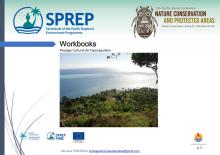
Workbook : Paysage culturel de Taputapuātea
SPREP Publications, Biodiversity Conservation, BRB
Available Online

Direction de l'Environnement

,

Direction de la Culture et du Patrimoine

,

Teriitehau, Raimana

2020
Les sites d’action visé par le plan de travail font référence aux parcelles affectées par la Polynésie française à sa Direction de la Culture et du Patrimoine (DCP) pour la gestion du Paysage Culturel Taputapuātea. De par cette maîtrise foncière s’en suit un droit d’intervention dans le cadre précis sur la lutte contre les espèces exotiques envahissantes. De plus elle permet de garantir le suivi et l’évaluation des actions qui seront menées sur la période du projet et voir au-delà. Globalement, en matière de biodiversité et de la culture polynésiennne ces sites se définissent selon 3 critères: (i) chaque site présente un attrait culturel majeur avec la présence plus ou moins importante de vestiges archéologiques; (ii) la faune et la flore qui s’y développe est indigène et/ou d’introduction polynésienne “naturalisé”; et (iii) des espèces protégés par le code de l’environnement polynésien et incrites sur la liste rouge de l’UICN sont présentes. La sacralité et le respect de ces lieux par la communauté locale est un atout de préservation de ces attributs « Nature et culture ». Ces sites s’incrivents dans un paysage anthropisé, il faut néanmoins les considérés comme des points refuge pour la biodiversité.
The Economics of Climate Change : the Stern review / [study conducted by] Nicholas Stern.
Climate Change Resilience

Stern, Nicholas

2007
Climate change-- our approach: The science of climate change : scale of the environment challenge ; Economics, ethics and climate change ; Ethical frameworks and intertemporal equity -- Impacts of climate change on growth and development: How climate change will affect people around the world ; Implications of climate change for development ; Costs of climate change in developed countries ; Economic modelling of climate-change impacts -- The economics of stabilisation: Projecting the growth of greenhouse-gas emissions ; Climate change and the Kuznets curve ; The challenge of stabilisation ; Identifying the costs of mitigation ; Macroeconomic models of costs ; Structural change and competitiveness ; Key statistics for 123 UK production sectors ; Opportunities and wider benefits from climate policies ; Towards a goal for climate-change policy -- Policy responses for mitigation: Harnessing markets for mitigation : the role of taxation and trading ; Carbon pricing and emission markets in practice ; Accelerating technological innovation ; Beyond carbon markets and technology -- Policy responses for adaptation: Understanding the economics of adaptation ; Adaptation in the developed world ; Adaptation in the developing world -- International collective action: Framework for understanding international collective action for climate change -- Creating a global price for carbon -- Supporting the transition to a low-carbon global economy -- Promoting effective international technology co-operation -- Reversing emissions from land use change -- International support for adaptation -- Conclusions : building and sustaining international co-operation on climate change.