Search the SPREP Catalogue

Refine Search Results

Tags / Keywords

Available Online

Tags / Keywords

Available Online

443 result(s) found.

Sort by

You searched for

  • Author SPREP
    X
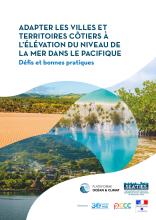
Adapter les villes et territoires côtiers à l’élévation du niveau de la mer dans le Pacifique : défis et bonnes pratiques.
SPREP Publications, Climate Change Resilience, Biodiversity Conservation
Available Online

Devignol, Lisa ... et al.

2024
Ce rapport est l'un des principaux résultats de l'atelier régional Sea'ties Pacifique qui s'est tenu du 10 au 12 juillet 2023 à Nadi (Fidji). L'atelier a été organisé par la Plateforme Océan & Climat, le Programme régional océanien de l'environnement (PROE), et le Pacific Climate Change Pacifique (PCCC), avec le soutien financier du Fonds de coopération économique, sociale et culturelle pour le Pacifique (« Fonds Pacifique », Ministère de l’Europe et des Affaires Etrangères), du PCCC, et du PROE par le biais du programme d’assistance technique de l’Initiative Kiwa. Le rapport fournit une vue d'ensemble des défis actuels en matière d'adaptation dans la région du Pacifique, ainsi que des initiatives inspirantes pour les relever. Les conclusions de ce rapport s'appuient sur les points de vue exprimés lors d’entretiens et sur les discussions de l'atelier lui-même. Il souligne et démontre à quel point, dans une région où de nombreuses îles sont de faible altitude, où la grande majorité de la population vit au bord de l'océan et où la côte s'urbanise rapidement, l'élévation du niveau de la mer reste une question existentielle et qu'il est primordial d'accélérer les mesures d'atténuation et d'adaptation.
Minimizing cross-relam threats from land-use change: A national-scale conservation framework connecting land, freshwater and marine system
Environmental Governance, Biodiversity Conservation
Available Online

Atkinson, S.

,

Peterson, N

,

Possingham, H P

,

Tulloch, V J D.

,

et al.

2021
There is a growing recognition that conservation strategies should be designed accounting for cross-realm connections, such as freshwater connections to land and sea, to ensure effectiveness of marine spatial protection and minimize perverse outcomes of changing land-use. Yet, examples of integration across realms are relatively scarce, with most targeting priorities in a single realm, such as marine or freshwater, while minimizing threats originating in terrestrial ecosystems. To date, no study has optimized priorities across multiple realms to produce a spatially explicit integrated conservation plan that simultaneously accounts for multiple human activities at a national scale. This represents a major gap in the application of existing cross-realm planning theory. We present a national scale conservation framework for selecting protected areas using a case study of Papua New Guinea (PNG) that integrates multiple systems and ecological connectivity to account for cross-realm benefits and minimize threats of land-use and climate change. The relative importance of both the forests and inshore reef environments to PNG subsistence and commercial livelihoods emphasizes the importance of considering the connections between the land and sea. The plan was commissioned by the PNG Conservation and Environment Protection Authority and identifies a comprehensive set of priorities that meet conservation targets in both the land and sea. Our national-scale prioritization framework is useful for agencies and managers looking to implement actions given multiple objectives, including watershed management and biodiversity protection, and ensures actions are efficient and effective across the land and sea.