Search the SPREP Catalogue

Refine Search Results

Related Countries

Language

Available Online

Related Countries

Available Online

9 result(s) found.

Sort by

You searched for

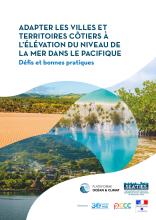
Adapter les villes et territoires côtiers à l’élévation du niveau de la mer dans le Pacifique : défis et bonnes pratiques.
SPREP Publications, Climate Change Resilience, Biodiversity Conservation
Available Online

Devignol, Lisa ... et al.

2024
Ce rapport est l'un des principaux résultats de l'atelier régional Sea'ties Pacifique qui s'est tenu du 10 au 12 juillet 2023 à Nadi (Fidji). L'atelier a été organisé par la Plateforme Océan & Climat, le Programme régional océanien de l'environnement (PROE), et le Pacific Climate Change Pacifique (PCCC), avec le soutien financier du Fonds de coopération économique, sociale et culturelle pour le Pacifique (« Fonds Pacifique », Ministère de l’Europe et des Affaires Etrangères), du PCCC, et du PROE par le biais du programme d’assistance technique de l’Initiative Kiwa. Le rapport fournit une vue d'ensemble des défis actuels en matière d'adaptation dans la région du Pacifique, ainsi que des initiatives inspirantes pour les relever. Les conclusions de ce rapport s'appuient sur les points de vue exprimés lors d’entretiens et sur les discussions de l'atelier lui-même. Il souligne et démontre à quel point, dans une région où de nombreuses îles sont de faible altitude, où la grande majorité de la population vit au bord de l'océan et où la côte s'urbanise rapidement, l'élévation du niveau de la mer reste une question existentielle et qu'il est primordial d'accélérer les mesures d'atténuation et d'adaptation.
Gender and the Pacific Adaptation to Climate Change (PACC) programme: Assessment and Action Plan. Technical Report 3
Climate Change Resilience
Available Online

Pacific Adaptation to Climate Change Programme (PACC)

,

Secretariat of the Pacific Regional Environment Programme (SPREP)

2014
The Pacific Adaptation to Climate Change (PACC) programme is the largest climate change adaptation initiative in the Pacific region, with activities in 14 countries and territories. PACC has three main areas of activity: practical demonstrations of adaptation measures; driving the mainstreaming of climate risks into national development planning and activities; and sharing knowledge in order to build adaptive capacity. The programme focuses on three key climate-sensitive development sectors: coastal zone management, food security and food production, and water resources management. The PACC programme began in 2009 and is scheduled to end in December 2014. As the first major climate change adaptation programme in the Pacific, PACC has led the way in developing and designing adaptation projects, using a ‘learning by doing’ approach. Many lessons have been learned and better practices developed as the programme has progressed. One of these is the importance of integrating gender into climate change adaptation activities. Gender was mostly overlooked during the initial stages of the programme, but significant efforts have since been made to address this shortcoming and integrate gender across programme activities. This report summarises two key documents produced by PACC as part of the drive to address gender. The first, a Gender Assessment of the programme, was carried out in 2012 to assess the level and degree that the programme addressed gender. The Gender Action Plan, which covers 2013–2014, was developed soon afterwards to address the recommendations arising from the Assessment. Activities in the Plan are currently underway, and will be reported in further PACC publications.
Government of the Cook Islands, Federated States of Micronesia, Fiji, Marshall Islands, Nauru, Niue, Palau, Papua New Guinea, Samoa, Solomon Islands, Tonga, Tuvalu and Vanuatu : PIMS2162 - Pacific Adapation to Climate Change (PACC) project document
Climate Change Resilience, Biodiversity Conservation
Available Online

Pacific Adaptation to Climate Change Programme (PACC)

,

Secretariat of the Pacific Regional Environment Programme (SPREP)

2007
For Pacific SIDS, the need for adaptation to climate change has become increasingly urgent. Long-term climate changes, including the increasing frequency and severity of extreme events such as high rainfall, droughts, tropical cyclones, and storm surges are affecting the lives and livelihoods of people in PICs. Coupled with non-climate drivers, such as inappropriate land use, overexploitation of resources, increasing urbanization and population increase, development in the region is increasingly undermined. For the low lying atolls, the likely economic disruption from climate change pressures could be catastrophic, even to the extent of requiring population relocation to other islands or adding numbers to the Pacific diaspora, with the subsequent social and cultural disruption having unknown proportions. Failure to reduce vulnerability could also result in loss of opportunities to manage risks in the future when the impacts may be greater and time to consider options limited.