Search the SPREP Catalogue

4 result(s) found.

Sort by

You searched for

Adapter les villes et territoires côtiers à l’élévation du niveau de la mer dans le Pacifique : défis et bonnes pratiques.
SPREP Publications, Climate Change Resilience, Biodiversity Conservation
Available Online

Devignol, Lisa ... et al.

2024
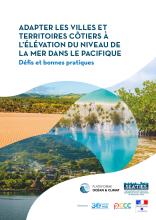
Ce rapport est l'un des principaux résultats de l'atelier régional Sea'ties Pacifique qui s'est tenu du 10 au 12 juillet 2023 à Nadi (Fidji). L'atelier a été organisé par la Plateforme Océan & Climat, le Programme régional océanien de l'environnement (PROE), et le Pacific Climate Change Pacifique (PCCC), avec le soutien financier du Fonds de coopération économique, sociale et culturelle pour le Pacifique (« Fonds Pacifique », Ministère de l’Europe et des Affaires Etrangères), du PCCC, et du PROE par le biais du programme d’assistance technique de l’Initiative Kiwa. Le rapport fournit une vue d'ensemble des défis actuels en matière d'adaptation dans la région du Pacifique, ainsi que des initiatives inspirantes pour les relever. Les conclusions de ce rapport s'appuient sur les points de vue exprimés lors d’entretiens et sur les discussions de l'atelier lui-même. Il souligne et démontre à quel point, dans une région où de nombreuses îles sont de faible altitude, où la grande majorité de la population vit au bord de l'océan et où la côte s'urbanise rapidement, l'élévation du niveau de la mer reste une question existentielle et qu'il est primordial d'accélérer les mesures d'atténuation et d'adaptation.
Dynamics in the global protected-area estate since 2004
Available Online

Burgess, Neil

,

Burrows, Georgina

,

Harris, Nyeema

,

Juffe-Bignoli, Diego

,

Kingston, Naomi

,

Lewis, Edward

,

MacSharry, Brian

Nations of the world have committed to a number of goals and targets to address the global environmental challenges humanity faces. Protected areas have for centuries been a key strategy in conservation and play a major role in addressing current challenges. The most important tool used to track progress on protected area commitments is the World Database on Protected Areas (WDPA). Periodic assessments of the world’s protected area estate show steady growth over the last two decades. However, the current method, which uses the latest version of the WDPA, does not show the true dynamic nature of protected areas over time, nor does it provide information on sites removed from the WDPA. In reality, this methodology can only show growth or remain stable. This paper presents a novel approach to assess protected area change over time using twelve temporally distinct versions of the WDPA that quantify area added, and removed, from the WDPA annually from 2004 to 2016. Results show that both the narrative of continual protected area growth and the counter-narrative of protected area removal are overly simplistic. The former because growth has been almost entirely marine and the latter because we demonstrate that some areas removed are re-protected in later years. Analysis indicates that, on average, 2.5 million km2 is added to the WDPA annually and 1.1 million km2 is removed. Reasons for the inclusion and removal of protected areas in the WDPA database are explored and discussed. To meet the 17% land coverage component of Aichi Biodiversity Target 11 by 2020, which stands at 14.7% in 2016, the world will either need to reduce the rate of protected area removal or increase the rate of protected area designation and addition to the WDPA.