Search the SPREP Catalogue

Refine Search Results

Tags / Keywords

Publication Year

Available Online

Tags / Keywords

Publication Year

Available Online

18 result(s) found.

Sort by

You searched for

Dispositif de suivi de l'abondance et de l'impact du cerf - Fiche finale de capitalisation - PROTEGE
SPREP Publications, Biodiversity Conservation, BRB
Available Online

PROE / SPREP

2025
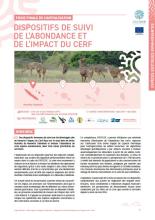
Des dispositifs innovants de suivi ont été développés afin de mesurer l’impact du Cerf Rusa sur le sous-bois de forêts humides de Nouvelle Calédonie et évaluer l’abondance de cette espèce envahissante, dans trois zones prioritaires du territoire. L’élaboration de ces dispositifs poursuit des objectifs complémentaires aux actions de régulation professionnelle mises en œuvre dans le cadre de PROTEGE. Le suivi vise notamment à réaliser un état initial et à évaluer les bénéfices des opérations de régulation, grâce à des outils adaptés à des zones d’intervention difficiles d’accès et caractérisées par une biodiversité exceptionnelle, plus de 80% des espèces végétales des forêts humides d’altitude étant endémiques à la Nouvelle-Calédonie. Un travail initial de sectorisation a permis mieux de caractériser les enjeux, les pressions sur l’environnement ainsi que le contexte socio-économique afin de délimiter les zones d’intervention prioritaires. Pour la première fois en Nouvelle-Calédonie, un protocole standardisé de mesure de l’impact des cerfs a été élaboré. Il s’appuie sur plusieurs indicateurs et prend en compte les spécificités des espèces végétales concernées et des contraintes associées à sa mise en œuvre. En complément, PROTEGE a permis d’élaborer une méthodeinnovante d’évaluation de l’abondance des cerfs, reposant sur l’utilisation d’un drone équipé de capteur thermique pour l’enregistrement de vidéos nocturnes. Un algorithme développé spécifiquement a par ailleurs vocation à réaliser automatiquement les détections à partir de ces vidéos, facilitant considérablement le traitement des données. La mise en œuvre de ce protocole pour la prospection de 4 700 hectares a révélé des densités de populations et des concentrations de hardes localement très élevées, atteignant par endroits des niveaux parmi les plus élevés enregistrés à l’échelle mondiale. Ces résultats fournissent des informations précieuses pour le ciblage de futures interventions et le suivi de leurs bénéfices. FICHE FINALE DE CAPITALISATION DU PROJET PROTEGE, financé par l'Union Européenne.
Environmental Media Training for Representatives from Nine Pacific Island Countries Held in Suva
Environmental Governance, Biodiversity Conservation, Anamua: Treasures of the Pacific Environment
Available Online

Court, Caroline

A regional workshop was organized in Suva, Fiji, aimed at bolstering environmental journalism among media professionals from nine Pacific Island nations. Hosted by prominent environmental organizations, including the Secretariat of the Pacific Regional Environment Programme (SPREP), the event aimed to strengthen reporters’ ability to cover complex environmental issues, with an initial focus on climate change The Pacific is acutely vulnerable to environmental threats such as intensifying cyclones, sea-level rise, and coastal flooding, yet regional media remain under-equipped to report these dangers effectively. Better-informed journalism is seen as essential to influence policy, raise community awareness, and support climate adaptation strategies . The curriculum encompassed: Simplifying scientific and technical environmental information for broader audiences, Investigating and sourcing credible data, Crafting impactful narratives for print, radio, digital, and broadcast formats, Networking with climate and environmental experts to deepen reporting quality . Outcomes & Goals Journalists left the training inspired and better prepared, equipped with tools to translate complex climate issues into compelling public stories. The workshop aimed to foster a durable network of informed environmental correspondents across the Pacific, strengthening regional media collaboration and coverage.
Impact of Pesticides in the South Pacific: “Poisoned Paradise” – Case Studies from Tonga’s Megapode and Rarotonga’s Fly
Biodiversity Conservation, Waste Management and Pollution Control, Anamua: Treasures of the Pacific Environment
Available Online

Court, Caroline

1. Overview & Concerns A regional report titled “Poisoned Paradise” examines the environmental consequences of pesticide use across South Pacific islands, highlighting the ecological risks of toxic chemicals in agriculture and disease control . 2. Tonga – Tongan Megapode (“Malau”) The report raises concerns about pesticide exposure in Tonga’s fragile ecosystems, including impacts on unique species like the endangered Tongan megapode (Megapodius pritchardii). While direct studies are limited, ongoing threats include habitat degradation and potential chemical contamination in breeding grounds—often geothermal nests on volcanic soils. 3. Rarotonga – Indigenous Fly Species In Rarotonga (Cook Islands), pesticide usage to control agricultural pests and disease vectors (e.g., fruit flies, mosquitoes) threatens endemic insect populations, disrupting local food webs and ecological balance. Residues may accumulate in soils, water, and non-target wildlife—posing risks to biodiversity and human communities. 4. Broader Regional Themes The report indicates South Pacific nations increasingly rely on pesticides without sufficient regulation, labelling, monitoring, or disposal systems, leading to misuse and environmental contamination Over half of these countries report negative impacts from toxic chemicals in agriculture and public health initiatives, raising the need for stronger governance on chemical management. 5. Recommendations & Path Forward Strengthen regulatory frameworks: Licensing, proper labelling, safe use protocols. Build local capacity: Training for farmers, pest control operatives, and environmental officers. Promote integrated pest management and safer alternatives like biological controls. Enhance monitoring and waste disposal infrastructure to prevent environmental build-up. Foster regional cooperation to share research, best practices, and regulatory support.