Search the SPREP Catalogue

Refine Search Results

Tags / Keywords

Available Online

Tags / Keywords

Available Online

45901 result(s) found.

Sort by

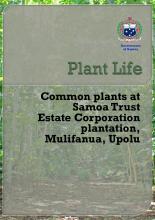
Plant Life : Common plants at Samoa Trust Estate Corporation plantation, Mulifanua, Upolu
Climate Change Resilience
Available Online

Government of Samoa

2017
Samoa is home to abundant plant life including indigenous species and some foreign introduced plant species. A majority of the foreign plants were introduced to Samoa in the pre-independence era through arrival of the early missionaries, Germans and Japanese, for various purposes from medicinal use to construction. These plants can be found across all the four islands; Upolu, Savai’i, Manono and Apolima. As part of the EU-GIZ Adapting to Climate Change and Sustainable Energy (ACSE) programme, a component of the Energy Bill and Sustainable Bioenergy, Samoa project focuses on biomass resource assessments at the Samoa Trust Estates Corporation (STEC) Plantation at Mulifanua, Upolu. Through fieldwork for biomass resource assessments at the non-leased land areas within the STEC Mulifanua plantation, eight common plants were identified and further scientific analysis on each was conducted by the Scientific Research Organisation of Samoa (SROS). SROS laboratory tests took place over a period of 14 days using the Quality Management System implemented by SROS and which also meets the requirements of the International Organization for Standardization (ISO) and the International Electrotechnical Commission (IEC) standards, ISO/IEC 17025 (2005). Thus, this publication provides a brief description of these plants as well as some data on moisture content and energy content under different conditions.

Impact of anthropogenic disturbances on a diverse riverine fish assemblage in Fiji predicted by functional traits
Available Online

Brown, Christopher J.

,

Jenkins, Aaron P.

,

Jupiter, Stacy D.

,

Lin, Hsien-Yung

2017
1. Anthropogenic disturbances particularly affect biodiversity in sensitive freshwater ecosystems by causing species loss. Thus, measuring the response of species to multiple disturbances is a key issue for conservation and environmental management. 2. As it is not practical to assess the response of every species in a community, we compared the performance of trait and taxonomic-based groupings of species for their abilities to predict species loss in a threatened freshwater fish assemblage. Specifically, we examined responses of a Fijian freshwater fish assemblage to deforestation, placement of anthropogenic barriers (overhanging culverts) and the presence of introduced cichlids. 3. Species grouped by traits showed more consistent responses to disturbances than taxonomic groups. In particular, species belonging to trait groups that were estuary associated favoured medium-to-hard substrate, while feeding specialists were highly likely to be absent in catchments with high deforestation and overhanging culverts. The presence of introduced cichlids (Oreochromis mossambicus and O. niloticus) had a smaller effect than deforestation and barriers, but was negatively associated with species richness of diadromous species with climbing ability and positively associated with presences of some piscivores. The trait groups also revealed that detritivores, species favouring soft substrate, and those with a broad dietary range were less sensitive to anthropogenic disturbances. 4. Our study indicates that using traits to predict species loss from disturbed environments can aid in detecting the responses of rare species to disturbance. In addition, we provided a method to estimate the consistency of species’ responses to disturbance. This study may ultimately help managers identify the most effective actions for conserving sensitive species that are seldom recorded in surveys.