Search the SPREP Catalogue

Refine Search Results

Tags / Keywords

Available Online

Tags / Keywords

Available Online

2180 result(s) found.

Sort by

You searched for

  • Subject Protected areas - Management
    X
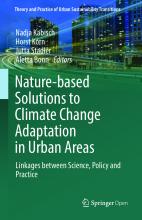
Nature-Based Solutions to Climate Change Adaptation in Urban Areas
Available Online

Nadja Kabisch, Horst Korn, Jutta Stadler, Aletta Bonn

2017
This book series Theory and Practice of Urban Sustainability Transitions is intended to explore the different dynamics, challenges, and breakthroughs in accelerating sustainability transitions in urban areas across the globe. We expect to find as much different and diverse stories, visions, experiments, and creative actors as there are cities: from metropolises to country towns, from inner city districts to suburbs, from developed to developing, from monocultural to diverse, and from hierarchical to egalitarian. But we also expect to find patterns in processes and dynamics of transitions across this diversity. Transition dynamics include locked-in regimes that are challenged by changing contexts, ecological stress and societal pressure for change as well as experiments and innovations in niches driven by entrepreneurial networks, and creative communities and proactive administrators. But also included are resistance by vested interests and sunken costs, uncertainties about the future amongst urban populations, political instabilities, and the erosion of social services and systems of provision. And finally there are the forming of transformative arenas, the development of coalitions for change across different actor groups, the diffusion and adoption of new practices, and exponential growth of sustainable technologies. For this series we seek this middle ground: between urban and transition perspectives, between conceptual and empirical, and between structural and practical. We aim to develop this series to offer scholars state-of-the-art theoretical developments applied to the context of cities. Equally important is that we offer urban planners, professionals, and practitioners interested or engaged in strategic interventions to accelerate and guide urban sustainability transition frameworks for understanding and dealing with on-going developments, methods, and instruments. This book series will lead to new insights into how cities address the sustainability challenges they face by not returning to old patterns but by searching for new and innovative methods and instruments that are based on shared principles of a transitions approach. Based on concrete experiences, state-of-the-art research, and ongoing practices, the series provides rich insights, concrete and inspiring cases as well as practical methods, tools, theories, and recommendations. The book series, informed by transition thinking as it was developed in the last decade in Europe, aims to describe, analyse, and support the quest of cities around the globe to accelerate and stimulate such a transition to sustainability. To sum up, the book series aims to: – Provide theory, case studies, and contextualized tools for the governance of urban transitions worldwide – Provide a necessary and timely reflection on current practices of how transition management is and can be applied in urban contexts worldwide – Further the theorizing and conceptual tools relating to an understanding of urban sustainability transitions – Provide best practices of cities across countries and different kinds of cities as well as across policy domains in shaping their city’s path towards sustainability
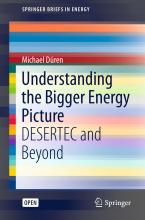
Understanding the Bigger Energy Picture
Available Online

Michael Düren

2017
Since thousands of years, the human race has been developing cultural skills and technological capabilities that support its struggle for survival and lead to dominance over all other species. Since about a century, the exponential growth of knowledge, technology, industry and population (see Fig. 1.1) has reached a scale where man modifies biosphere to an extent, that living conditions on the whole planet earth start to change significantly. Resources that had been abundant are becoming scarce within decades. We have arrived in the Anthropocene [1] where man has a significant impact on the basic living conditions of the biosphere of the whole planet. A continuation of this growth rate will unavoidably reach its natural limits where resources vanish; the biosphere will change more rapidly than the ability of organisms and ecosystems to accommodate, and contaminations will endanger living. When such a condition is reached, it is likely that our human civilization will collapse and human population will diminish rapidly. Historic examples demonstrated that drought, hunger, wars and epidemics were typical endpoints of drastic environmental changes and overpopulation. While historic examples mostly affected only individual towns, islands, countries or indigenous nations, the limits of growth this time affect the whole planet and there is no “new world” to which our civilization can migrate. Recent research has proven that the era of a new biological mass extinction has already started [2] and it can be assumed that finally also our species will be affected.
Global Atlas of Marine Fisheries: A critical appraisal of catches and ecosystem impacts
Biodiversity Conservation

Pauly, Daniel (ed.)

,

Zeller, Dirk (ed.)

2016
Until now, there has been only one source of data on global fishery catches: information reported to the Food and Agriculture Organization of the United Nations by member countries. An extensive, ten-year study conducted by The Sea Around Us Project of the University of British Columbia shows that this catch data is fundamentally misleading. Many countries underreport the amount of fish caught (some by as much as 500%), while others such as China significantly overreport their catches. The Global Atlas of Marine Fisheries is the first and only book to provide accurate, country-by-country fishery data. This groundbreaking information has been gathered from independent sources by the world’s foremost fisheries experts, and edited by Daniel Pauly and Dirk Zeller of the Sea Around Us Project. The Atlas includes one-page reports on 273 countries and their territories, plus fourteen topical global chapters. National reports describe the state of the country's fishery, by sector; the policies, politics, and social factors affecting it; and potential solutions. The global chapters address cross-cutting issues, from the economics of fisheries to the impacts of mariculture. Extensive maps and graphics offer attractive and accessible visual representations. While it has long been clear that the world’s oceans are in trouble, the lack of reliable data on fishery catches has obscured the scale, and nuances, of the crisis. The atlas shows that, globally, catches have declined rapidly since the 1980s, signaling an even more critical situation than previously understood. The Global Atlas of Marine Fisheries provides a comprehensive picture of our current predicament and steps that can be taken to ease it. For researchers, students, fishery managers, professionals in the fishing industry, and all others concerned with the status of the world’s fisheries, the Atlas will be an indispensable resource.