Search the SPREP Catalogue

Refine Search Results

Tags / Keywords

Available Online

Tags / Keywords

Available Online

162 result(s) found.

Sort by

You searched for

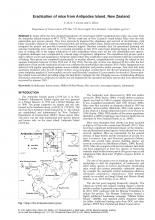
Eradication of mice from Antipodes Island, New Zealand
Biodiversity Conservation, BRB
Available Online

Elliott, G.

,

Greene, T.

,

Horn, S.

2019
In winter 2016, the New Zealand Department of Conservation (DOC) eradicated mice (Mus musculus) from the Antipodes Islands located at 49°S 178°E, 760 km south-east of New Zealand’s South Island. Mice were the only mammalian pest species present. They have extensively impacted the abundance and survival of invertebrates, with likely secondary impacts on endemic terrestrial birds and nesting seabird fauna. Public-private partnerships with DOC instigated the project and provided essential financial support. Baseline scientific data for operational planning and outcome monitoring were collected by a research expedition in July 2013 and project planning began in 2014. At the time of writing, this is the largest eradication of mice undertaken where mice are the sole mammalian pest species. Logistical challenges were complicated by a broad range of regulatory obligations. The expedition-style project used a ship to deliver a team and equipment to Antipodes Island where they established camp and remained until the completion of baiting. Bait spread was completed incrementally as weather allowed, comprehensively covering the islands in two separate treatments between 18 June 2016 and 12 July 2016. The last sign of mice was detected 20 days after the fi rst application of bait and the eradication of mice was confirmed by monitoring in late summer 2018. Public engagement was achieved with regular operational updates across multiple platforms and positive media coverage. Non-toxic bait trials accurately predicted some by-kill of pipit (Anthus novaeseelandiae steindachneri) but did not anticipate poisoning of some Antipodes parakeet (Cyanoramphus unicolor) and Reischek’s parakeet (Cyanoramphus hochstetteri). Known pest-free islands were not baited, providing refuge for land birds to mitigate the risk. Fledging success of Antipodean albatross (Diomedea antipodensis antipodensis) chicks was not impacted by the operation and those species that were affected had recovered by summer 2018.
The Isles of Scilly seabird restoration project: the eradication of brown rats (Rattus norvegicus) from the inhabited islands of St Agnes and Gugh, Isles of Scilly
Biodiversity Conservation, BRB
Available Online

Bell, E.

,

Boyle, D.

,

Buckley, P.

,

Floyd, K.

,

Garratt, W.

,

Lock, L.

,

Mason, S.

,

McCarthy, R.

,

Pearce, J.

,

Pearson, J.

,

St Pierre, P.

,

Sugar, K.

2019
As part of the Isles of Scilly Seabird Recovery Project, and directed by Wildlife Management International Ltd, the eradication of brown rats (Rattus norvegicus) from the inhabited islands of St Agnes & Gugh, Isles of Scilly was completed between October 2013 and April 2014 with the assistance of volunteers, and staff from the Royal Society for the Protection of Birds, Isles of Scilly Wildlife Trust and Natural England. Bait stations with cereal-based wax blocks containing bromadiolone at 0.005% w/w were established on a 40–50 metre grid over the island. With the presence of 85 residents on the 142 ha islands, this is the largest community-based brown rat eradication globally to date. Given the fact that a community is based on these islands, community engagement and advocacy was a vital and fundamental part of the eradication. Consultation for eradication began three years prior to the operation to explain the requirements for the proposed project and to assess support, but this built on many years of wider community engagement with seabird conservation. All of the residents supported the eradication of rats and vision of the project. The consultation and inclusion of the community in decision-making and management of the Isles of Scilly Seabird Recovery Project was a critical part of the operation and key to the success of the eradication. The community took ownership of the project and has committed to the on-going biosecurity requirements following the eradication of rats. The removal of brown rats from St Agnes and Gugh was a major achievement and provided the opportunity to restore the islands' communities of seabirds and other native species. This project provided an example of the effectiveness of ground-based rodent eradication techniques on an inhabited island and the lessons learnt during this operation can be used to help proposed eradications on other islands with communities and with terrain suitable for ground-based techniques.
Simultaneous rat, mouse and rabbit eradication on Bense and Little Bense Islands, Falkland Islands
Biodiversity Conservation, BRB
Available Online

Carey, P.W.

2019
Bense and Little Bense Islands (144 ha total area) have, for over a century, supported populations of three introduced pest mammals: Norway rat (Rattus norvegicus), house mouse (Mus musculus), and European rabbit (Oryctolagus cuniculus). An operation to eradicate these mammals simultaneously was undertaken in winter 2016. Cereal pellets laced with brodifacoum (25 ppm) were hand-broadcast on both islands in two applications with 3,900 kg of bait applied in total. Baiting transects were spaced at 20 m intervals and bait-throwing positions located every 20 m along each transect. The coastline was also baited at 20 m intervals. Precision bait coverage was aided by programming GPS units to give off an audible alarm when staff reached each correct bait-throwing position. Application 1 resulted in an average bait density of 15.3 kg/ha. Application 2 commenced 10 days later and resulted in an average baiting density of 11.7 kg/ha. Reduced availability of fi eld staff resulted in coverage in Application 2 being less complete than in Application 1 and only the most important mammal habitats were baited a second time. These were: all tussock areas, all coastlines, and some inland heath areas. Areas with no vegetation (e.g. burned zone on Bense) and some inland heath communities were not treated, although all of these retained unconsumed bait from Application 1. Some non-target mortality was recorded, with dolphin gulls (Larus scoresbii) being the most common victims. This was also the only species observed to consume bait pellets. Consumption of poisoned mammals or gulls may have killed three turkey vultures (Cathartes aura jota), one striated caracara (Phalcoboenus australis), and one short-eared owl (Asio flammeus). The removal of invasive species is part of a broader ecological restoration plan for these islands and will hopefully lead to an increase in native biodiversity, including the re-establishment of the endemic passerines Cobb’s wren (Troglodytes cobbi) and blackish cinclodes (Cinclodes antarcticus).
House mice on islands: management and lessons from New Zealand
Biodiversity Conservation, BRB
Available Online

Birmingham,C.

,

Broome, K.

,

Brown, D.

,

Brown, K.

,

Corson, P.

,

Cox, A.

,

Golding, C.

,

Griffiths, R.

,

Murphy, E.

2019
The impacts of house mice (Mus musculus), one of four invasive rodent species in New Zealand, are only clearly revealed on islands and fenced sanctuaries without rats and other invasive predators which suppress mouse populations, influence their behaviour, and confound their impacts. When the sole invasive mammal on islands, mice can reach high densities and influence ecosystems in similar ways to rats. Eradicating mice from islands is not as difficult as previously thought, if best practice techniques developed and refined in New Zealand are applied in association with diligent planning and implementation. Adopting this best practice approach has resulted in successful eradication of mice from several islands in New Zealand and elsewhere including some of the largest ever targeted for mice; in multi-species eradications; and where mouse populations were still expanding after recent invasion. Prevention of mice reaching rodent-free islands remains an ongoing challenge as they are inveterate stowaways, potentially better swimmers than currently thought, and prolific breeders in predator-free habitat. However, emergent mouse populations can be detected with conventional surveillance tools and eradicated before becoming fully established if decisive action is taken early enough. The invasion and eventual eradication of mice on Maud Island provides a case study to illustrate New Zealand-based lessons around mouse biosecurity and eradication.
Rat eradication in the Pitcairn Islands, South Pacific: a 25-year perspective
Biodiversity Conservation, BRB
Available Online

Brooke, M.de L.

2019
This essay offers a 25-year overview of eff orts to remove Pacific rats (Rattus exulans) from the four islands of the Pitcairn group. Following the 1991–1992 discovery that rats were severely reducing breeding success of gadfly petrels (Pterodroma spp.), Wildlife Management International proposed eradication. Eradication success was achieved using ground-based baiting on the small atolls of Ducie and Oeno in 1997, and there is now evidence of petrel recovery on Oeno, but two eradication attempts on inhabited Pitcairn (1997 and 1998) failed. By the early 2000s, the development of aerial baiting through the 1990s placed an eradication operation on the fourth island, Henderson, within reach. Preparatory fieldwork in 2009 allayed doubts in two key areas: the feasibility of maintaining a captive “back-stop” Henderson rail (Porzana atra) population, and bait uptake by crabs (Coenobita spp.). Royal Society for the Protection of Birds (RSPB) expertise secured the necessary funding of £1.5 million, and 75 tonnes of brodifacoum-containing bait were dropped in August 2011. Despite extensive mortality of free-living rails, the population, supplemented by released captive birds, returned to pre-operational levels in 2–3 years. Meanwhile those tending captive rails saw no rat sign before leaving Henderson in November 2011. Unfortunately, a rat was sighted in March 2012, and continuing rat presence confirmed in May 2012. Subsequently rat numbers have returned to pre-operational levels without any sign of population ‘overshoot’ as observed on Pitcairn. Genetic analysis suggests around 80 rats, roughly 1 in 1,000, survived the bait drop. With no evidence of imperfect bait coverage or deficiencies in bait quality or brodifacoum resistance, it seems some animals chose not to eat bait. Choice tests on Henderson Island rats suggest some rats prefer natural foods over bait. This adverse situation may have been exacerbated because, in August 2011, natural fruits were more abundant than anticipated due to drought earlier in the year. To overcome rat preference for natural food, any second Henderson attempt might benefit from more attractive bait. Without such developments, a second attempt risks another failure. Henderson’s biota will survive the delay.
Considerations and consequences when conducting aerial broadcast applications during rodent eradications
Biodiversity Conservation, BRB
Available Online

Gill, C.

,

Griffi ths, R.

,

Holmes, N.

,

Howald, G.

,

Will, D.

2019
Aerial broadcast application is currently one of the most common methods for conducting rodent eradications on islands, particularly islands greater than 100 ha or with complex and difficult topography where access by ground teams is difficult. Overall, aerial broadcast applications have a high success rate, but can be burdened by logistical, regulatory, and environmental challenges. This is particularly true for islands where complex shorelines, sheer terrain, and the interface with the marine environment pose additional risks and concerns. Using data collected during ten eradication projects we investigate the influence that operational realities have on broadcast applications. We tested the association between the amount of bait used and island size, topography, and the desire to reduce bait application into the marine environment and then compared planned bait application to actual bait application quantities. Based on our results, islands of decreasing size and increasing coastal complexity tended to use more bait than anticipated and experienced greater variability in localised bait densities. During operations, we recommend analysing flight data to identify treated areas with localised bait densities that fall below the target application rate. We recommend that areas with low localised bait densities may result in biologically significant gaps that should receive an additional application of bait based on project risk variables such as target home range size, non-target bait competitors, and alternative foods. We also recommend a common language for discussing aerial broadcast applications and where future work can be done to improve operational decision making.
It's not all up in the air: the development and use of ground-based rat eradication techniques in the UK
Biodiversity Conservation, BRB
Available Online

Bell, E.A.

2019
Eradication techniques using ground-based devices were developed in New Zealand in the early 1970s to target invasive rodents. Since then, different bait station designs, monitoring tools and rodenticide baits have been developed, and changes in field techniques have improved and streamlined these operations. The use of these techniques has been taken around the world to eradicate rodents from islands. Eradication technology has moved rapidly from ground-based bait station operations to aerial application of rodenticides. However, regulations, presence of and attitudes of island-communities and presence of a variety of non-target species precludes the aerial application of rodenticides on islands in many countries. As such, ground-based operations are the only option available to many agencies for the eradication of invasive rodents from islands. It is important to recognise that the use of ground-based operations should be a valid option during the assessment phase of any eradication proposal even in countries that can legally apply bait from the air; in many instances the use of ground-based techniques can be as economic and rapid. The use of ground-based operations can also facilitate opportunities for in-depth monitoring of both target and non-target species. Using examples of the techniques and developments used in five ground-based rat eradication operations from the UK demonstrates how these methods can be used safely and successfully around the world, even on islands in the order of hundreds of hectares and those with communities.
Long term rodent control in Rdum tal-Madonna yelkouan shearwater colony
Biodiversity Conservation, BRB
Available Online

Cabello, J.S. Santiago

,

Lago, P.

,

Varnham, K.

2019
Rodent predation on eggs and chicks is one of the main threats to procellariiform species in the Mediterranean, where the black rat (Rattus rattus) and brown rat (R. norvegicus) have been present on many islands for centuries. The yelkouan shearwater (Puffinus yelkouan) is an endemic Mediterranean seabird species classified as vulnerable. Malta holds up to 10% of the global population; the largest colony, Rdum tal-Madonna (RM), protected as a Natura 2000 site, hosts around 500 breeding pairs. This colony has been monitored since its discovery in 1969. A very low reproductive success due to rat predation was noticed in the late 1990s to early 2000s. In 2007 a seasonal rodent control programme was established during the breeding season of yelkouan shearwater to reduce rat predation on eggs and chicks. Rodent control took place between 2007 and 2010 and was reviewed and continued from 2012 to 2017. Breeding success since 2007 has been higher than 80%. In two other colonies with rat presence and where rodent control did not take place, the breeding success in 2016 and 2017 was substantially lower than in the colony with the rodent control programme. The European storm-petrel (Hydrobates pelagicus melitensis) only breeds in rat-free areas like remote sea caves or islets around the Maltese islands. In 2014, the first breeding attempt by European storm-petrel was recorded on the Maltese mainland at RM with a chick fledging successfully for the first time in 2016. The ongoing LIFE Arcipelagu Garnija project is assessing rat predation in all Maltese yelkouan shearwater colonies in order to establish predator control in the most important yelkouan shearwater breeding sites in 2018.
Island invasives: scaling up to meet the challenge. Proceedings of the international conference on island invasives 2017
Biodiversity Conservation, BRB
Available Online

Curto, E.

,

Escobar, J.

,

Jusim, P.

,

Schiavini, A.

2019
A pilot project for the eradication of beavers (Castor canadensis) in Tierra del Fuego started as part of a bi-national agreement, signed between Argentina and Chile, to restore the affected environments. The project covers nine pilot areas of different landscapes and land tenures in the Argentinian part of Isla Grande de Tierra del Fuego. We report on the results from operations in the fi rst of the pilot areas. From October 2016 to January 2017, ten trappers (named restorers for advocacy purposes) used body-grip traps, snares and an air rifle, in a first phase, which included 2,237 trapping nights and 1,168 trap-sets. Shooting eff orts were not monitored. Traps were set for 1,401 trapping-nights and caught 175 beavers at a success rate of 12.5% (captures per trap night). Snares were set for 936 snare-nights and caught 22 beavers at a success rate of 2.3%. Seven beavers were shot. Most beavers (65%) were removed during the fi rst week of trapping in the different watercourse sections. Stopping trapping for a week or more did not increase efficiency. From March to May 2017 restorers removed 24 survivors and/or reinvaders, including 10 from two previously untrapped colonies. Capture efficiency for this removal period was low for body-gripping traps but not for snares. The sex ratio of catches was 47% females to 53% males. The age structure of catches was 15% kits, 29% yearlings, 51% adults, with 4% not aged. An estimated total of 41 colonies was trapped, giving an average of 5.6 animals per colony. After nominal eradication was declared by restorers, 154 camera trapping nights were deployed to assess eradication success. Nine cameras (of 26 cameras used) detected beavers. Therefore, eradication was not achieved using the methods and eff orts in the first part of the pilot study. This highlights the need for more eff ort or the application of different techniques or trapping strategies. For example, daily checking of traps may cause the animals to be cautious so, the next step in the programme will involve exploring alternative trapping methods to reduce disturbance.
Island invasives: scaling up to meet the challenge. Proceedings of the international conference on island invasives 2017
Biodiversity Conservation, BRB
Available Online

Godwin, J.

,

Heard, N.

,

Serr, M.

2019
House mice are significant invasive pests, particularly on islands without native mammalian predators. As part of a multi-institutional project aimed at suppressing invasive mouse populations on islands, we aim to create heavily male-biased sex ratios with the goal of causing the populations to crash. Effective implementation of this approach will depend on engineered F1 wild-lab males being effective secondary invaders that can mate successfully. As a first step in assessing this possibility, we are characterising genetic and behavioural differences between Mus musculus strains in terms of mating and fecundity using wild house mice derived from an invasive population on the Farallon Islands (MmF), a laboratory strain C57BL/6/129 (tw2), and F1 wild-lab off spring. Mice with the ‘t allele’ (tw2) have a naturally occurring gene drive system. To assess fertility in F1 wild-lab crosses, tw2 males were paired with wild-derived females from the Farallon Islands (MmF). Results of these matings indicate litter sizes are comparable but that weaned pup and adult wild-lab mice are heavier in mass. Next, we initiated tests of male competitiveness using larger (3 m2) enclosures with enrichment. We introduced both an MmF and a tw2-bearing male to two MmF females to assess mating outcomes. Preliminary results of these experiments show none of the off spring carried the t-allele. However, performing the same experiment with F1 wild-lab males instead of a full lab background resulted in 70% of off spring carrying the tw2 allele. This indicates that F1 wild-lab males may be able to successfully compete and secondarily invade. It will be important in subsequent experiments to determine what characteristics contribute to secondary invasion success. More generally, a better understanding of characteristics contributing to overall success in increasingly complex and naturalistic environments will be critical in determining the potential of a gene drive-based eradication approach for invasive mice on islands.