Search the SPREP Catalogue

Refine Search Results

Available Online

Available Online

265 result(s) found.

Sort by

You searched for

  • Subject Reserves - Oceania - Pacific
    X
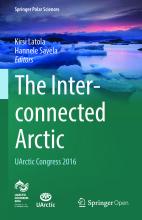
The Interconnected Arctic — UArctic Congress 2016
Available Online

Kirsi Latola, Hannele Savela

2017
The chapters of this book are derived from the UArctic Congress 2016 science sessions, focusing on themes identified in the report of the International Conference on Arctic Research Planning (ICARP III) that was published in 2015. Themes address the changes and developments as well as the challenges and opportunities that are taking place in today’s global world. The Arctic is changing faster than any other region in the world. Its climate is changing in a speed that cannot be found anywhere else, affecting either directly or indirectly to almost everyone and everything. How can the Arctic societies and cultures, ecosystems, and environments cope with these fast changes? This book is divided into six thematic parts reflecting the congress themes: Vulnerability of the Arctic Environments, Vulnerability of the Arctic Societies, Building the Long-Term Human Capacity, Arctic Safety, and Arctic Tourism. The final part of the book “Circumpolar, Inclusive and Reciprocal Arctic” looks at the Arctic in the light of the UArctic’s mission and values; Gunhild Hoogensen Gjørv, professor of political sciences, addresses a number of issues surrounding the implementation of gender perspectives in the Arctic research, and Ulunnguaq Markussen, UArctic Student Ambassador, calls for an Arctic awakening of peoples in the era when Arctic is seen as a place for natural resource extraction and economic benefits.
Freshwater ichthyofauna of the Pacific-Asia Biodiversity Transect (PABITRA) Gateway in Viti Levu, Fiji
Biodiversity Conservation

Boseto, David T.

,

Copeland, Lekima K. F.

,

Jenkins, Aaron P.

2016
The freshwater ichthyofauna of the Fiji islands remained poorly documented before the establishment of the Pacific-Asia Biodiversity Transect (PABITRA) network. The PABITRA approach assesses biodiversity along ocean-to-mountain transects and promotes sustainable land use on islands across the Pacific. Multiple surveys of freshwater fish species along the Viti Levu PABITRA transect have contributed six new occurrence records and one new species to the known freshwater fishes of Fiji since 2002. In total, 21 indigenous species of fish (9% endemic) from 10 families and no introduced fishes were found in the three PABITRA sites. Diversity was highest (16 species) at Savura forest reserve and decreased further inland into Sovi and Wabu. The assemblage found is dominated by highly migratory species (95%) that traverse the different aquatic habitats (marine, estuarine, lowland and upland streams) covered by the PABITRA transect. This high degree of connectivity highlights several growing issues affecting aquatic fauna on the high island of Viti Levu. The reduction in forest cover along the gateway transects, especially in the terminal reaches, and infrastructure development such as dams and weirs have deleterious effects on the migration routes of the Fijian ichthyofauna. Several species collected are important food sources and have cultural totemic importance to local inhabitants along the vertical transect. This paper documents the ichthyofauna of the Fiji gateway transect, ecological characteristics of this assemblage, IUCN Redlist conservation assessment status and highlights factors affecting the fragility and resilience of these communities, particularly focusing on the importance of life-history patterns and watershed conditions.