Search the SPREP Catalogue

Refine Search Results

Tags / Keywords

Available Online

Tags / Keywords

Available Online

2159 result(s) found.

Sort by

You searched for

  • Subject Protected areas - Management
    X
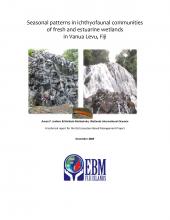
Seasonal patterns in ichthyofaunal communities of fresh and estuarine wetlands in Vanua Levu, Fiji : a technical report for the Fiji Ecosystem based management project
Biodiversity Conservation
Available Online

Jenkins, Aaron P.

,

Mailautoka, Kinikoto

2009
As a component of the Fiji Ecosystem Based management project, this study examined seasonal patterns of variation in the ichthyofaunal communities in seven river systems in Macuata and Kubulau districts, Vanua Levu, Fiji. The study was designed to determine the abundance, diversity and biomass of fishes within different reaches of the systems during the wet and dry seasons. Catchment characteristics clearly distinguish the districts in terms of potential impacts on ecological integrity. Macuata catchments, on average, are much larger (25789 vs 3306 ha), possess much less natural forest cover (49.6 vs 76 %), have greater density of roads (1.7 vs 0.51/km2 ) and river crossings (1.4 vs 0/km2 ), and are heavily invaded by exotic species Oreochromis spp and Gambusia affinis. Rainfall patterns are similar during the wet season for the districts but Kubulau has on average twice the rainfall during the dry season. 1616 individual fishes were collected or observed from 32 families, 19 genera and 87 species both seasons. 12% more species were seen during the wet season (68 vs 58), however the two districts show conflicting patterns with higher numbers of species in the wet in Kubulau District and higher numbers of species in the dry in Macuata District. Over half of species were observed in only one season (55%), 19 (21%) species only in the dry, 29 (33%) only in the wet. Proportions of life history patterns remain relatively consistent across both seasons although there are 6 % more estuarine migrant species (particularly mud dwelling species) and 1 % more amphidromous species in the wet while there is a 4% increase in freshwater straggler species in the dry mainly driven by additional pipefish species. It is clear that Kubulau, despite its smaller average catchment sizes is significantly (p = 0.035) more diverse than Macuata. Examination of community structure across reach and season suggest that position in river reach is a greater determinant of what species are in a community than season. A conflicting pattern between the districts with regard to seasonal influence on species richness, diversity, abundance and biomass of fishes if taken in conjunction with the water quality information, suggests the wet season is having a net positive effect on habitable space for fishes in Kubulau District and having a net negative effect in Macuata District. This result suggests degraded catchments are losing ecological resilience and natural responses to cycles of seasonal change. Comparison of mean abundance and biomass in Vanua Levu to the pristine rivers of Tetepare Island, Solomon Islands suggest that the rivers of Vanua Levu are already severely ecologically compromised and in most cases adequate biomass for food utilization is only energetically worthwhile in lower reaches.
Marine opportunity costs: a method for calculating opportunity costs to multiple stakeholder groups
Biodiversity Conservation
Available Online

Adams, Vanessa M.

2010
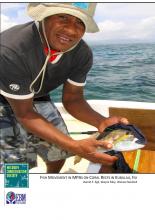
Research for this study was carried out under a two-year project to support the implementation of Ecosystem-Based Management (EBM) at two catchment-to-reef sites on Vanua Levu, Fiji, during which conservation planning approaches were trialled using EBM tools to evaluate options for re-designing marine protected area (MPA) networks. Current approaches in systematic conservation planning have focused on developing tools to maximize conservation benefits while minimizing socio-economic costs to users of a landscape or seascape area. In this study, we present a novel method for calculating the opportunity costs of conservation actions to multiple gear type users arising from fisher displacement due to the establishment of MPAs in Kubulau District, Vanua Levu, Fiji. The method builds upon those applied in land conservation in which the probability of land conversion to alternate functions is used to estimate opportunity costs to multiple stakeholders, which differs from previous approaches by providing information about costs of currently unused areas that may be of potential future benefit. We model opportunity costs of establishing a network of MPAs as a function of food fish abundance, probability of catch as function of gear type and market value of species. Count models (including Poisson, Negative Binomial and two zero-inflated models) were used to predict spatial distribution of abundance for preferred target fish species and validated against underwater visual census (UVC) surveys and biophysical predictor variables (reef type, reef exposure, depth, distance to shore, protection status). Spatial distributions of targeted fish within the three most frequently sighted food fish families (Acanthuridae, Lutjanidae, Scaridae) varied considerably: Lutjanidae had the highest abundance on barrier reefs; Acanthuridae on inshore fringing and patch reefs; and Scaridae on fringing reefs. Modeled opportunity cost, estimated as a function of abundance and probability of catch by gear type, indicated highest cost to fishers would arise from restricting access to the fringing reef between the villages of Navatu and Kiobo and the lowest cost would arise from restricting access to the Cakaunivuaka reef. The opportunity cost layer was added to Marxan models to identify optimum areas for protection to meet fisheries objectives in Kubulau’s traditional fisheries management area with: (a) the current MPA network locked in place; and (b) a clean-slate approach. The opportunity cost method presented here gives an unbiased estimate of opportunity costs to multiple gear types in a marine environment that can be applied to any region using existing species data.
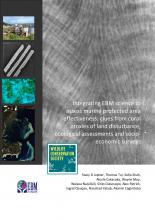
Integrating EBM science to assess marine protected area effectiveness: clues from coral proxies of land disturbance, ecological assessments and socio-economic surveys
Available Online

Jupiter, Stacy D...[et al.]

2010
Research for this study was carried out under a two-year project to support the implementation of Ecosystem-Based Management (EBM) at two catchment-to-reef sites on Vanua Levu, Fiji, during which period a pilot study was initiated to evaluate whether longlived coral records could be used to detect land-based disturbance to Fijian reefs. Trace element ratios of barium (Ba) to calcium (Ca) were measured at high (~weekly) resolution with laser ablation inductively coupled mass spectrometry (LA-ICP-MS) in cores collected from inshore and offshore Porites colonies. The Ba/Ca records from the inshore colony collected approximately 5 km south-east of the Yanawai River mouth and 3 km due west of the Nasue marine protected area (MPA) indicate heavy Ba/Ca enrichment between 1996- 1998, which may be related to high levels of sediment delivery to the nearshore while the Mt. Kasi gold mine was operational. Ba/Ca values from the offshore coral collected near the Namena MPA show consistently low baseline values during the same period and over the entire record. Underwater visual census (UVC) surveys of fish biomass, abundance and species richness from 2007 show significantly lower values inside the Nasue MPA than at adjacent sites open to fishing, while the opposite patterns are generally true for the Namena MPA. By synthesizing interdisciplinary data from multiple sources, deductive logic can be used to decipher major drivers of differences in effectiveness of the two district MPAs. Benthic survey data from Nasue closed and open areas showed no significant differences in specific factors which may indicate recent disturbance (e.g. macroalgal cover, rubble) and/or play strong roles in structuring reef fish communities (e.g. live coral cover, presence of fast growing branching corals, reef complexity). Therefore, we conclude that the historical disturbance from the Yanawai River either had minimal effect on benthic communities in Nasue MPA in sites surveyed or they have subsequently recovered and should therefore be able to support healthy reef fish populations if not subject to other types of disturbance. Socioeconomic surveys indicate that Kubulau residents are occasionally witness to infringements of MPA rules and the majority offenders come from outside the district. However, at the same time, Kubulau residents themselves have indicated catch locations within the Nasue (but not Namena) district MPA, suggesting that accidental or deliberate poaching occurs regularly, likely due to lack of awareness of MPA rules and boundaries and inability to see the Nasue MPA from the shore. Recommendations to improve the effectiveness of the MPA are discussed.
Overseas environmental impact statement: Guam and CNMI military relocation: relocating marines from Okinawa, visiting aircraft carrier berthing, and army air and missile defense task force: Executive summary : DRAFT
Biodiversity Conservation
Available Online

Naval Facilities Engineering Command, Pacific

2009
The National Environmental Policy Act of 1969 requires federal agencies to examine the environmental effects of their proposed actions. On behalf of the Department of Defense, the Department of the Navy is preparing this Draft EIS/OEIS to assess the potential environmental effects associated with the proposed military activities. The Navy is the lead agency for preparation of this Draft EIS/OEIS. The Office of the Secretary of Defense directed the Navy to establish a Joint Guam Program Office that serves as the NEPA proponent of the proposed actions. A number of federal agencies were invited to be cooperating agencies in the preparation of this Draft EIS/OEIS. These agencies have either jurisdiction or technical expertise for certain components of the proposed actions or a potentially affected resource. The agencies that have accepted the invitation to participate as cooperating agencies are United States (U.S.) Fish and Wildlife Service, Department of Transportation Federal Highways Administration, Federal Aviation Administration, U.S. Environmental Protection Agency Region 9, U.S. Office of Insular Affairs, U.S. Department of Agriculture, U.S. Army Corps of Engineers, and U.S. Air Force.
Natural solutions: protected areas helping people cope with climate change
Climate Change Resilience, Biodiversity Conservation
Available Online

Stem Lord Nicholas

2010
Climate change poses an unprecedented level of threat to life on the planet. In addition, predictions about the scale and speed of impact are continually being revised upwards, so that what was already a serious situation continues to look even more threatening. The facts are well known. Atmospheric greenhouse gases are creating warmer temperatures, ice melt, sea-level rise and an unpredictable climate, with a range of extremely serious and hard-to-predict consequences. Recent research shows an increasingly bleak picture. During the period of writing this report new information suggests that: we may already be too late to prevent widespread collapse of coral reef systems due to ocean acidification; climate change adaptation will cost US$75-100 billion a year from 2010 onwards for developing countries according to the World Bank; and climate change may move faster than expected with average temperatures rising 4ºC by 2060 compared to pre-industrial levels according to the UK Meteorological Office. But serious as the situation has now become, much can still be done to reduce the problems created by climate change. This report focuses on the role that protected areas can play in mitigating and adapting to climate change; a set of options that hitherto has been under-represented in global response strategies. In the rush for “new” solutions to climate change, we are in danger of neglecting a proven alternative.