Search the SPREP Catalogue

Refine Search Results

Tags / Keywords

Available Online

Tags / Keywords

Available Online

45916 result(s) found.

Sort by

Assessing the costs of adaptation to climate change: a review of the UNFCCC and other recent estimates
Climate Change Resilience
Available Online

Parry, Martin..et al

2009
Several recent studies have reported adaptation costs for climate change, including for developing countries. They have similar-sized estimates and have been influential in discussions on this issue. However, the studies have a number of deficiencies which need to be transparent and addressed more systematically in the future. A re-assessment of the UNFCCC estimates for 2030 suggests that they are likely to be substantial under-estimates. The purpose of this report is to illustrate the uncertainties in these estimates rather than to develop new cost estimates, which is a much larger task than can be accomplished here. The main reasons for under-estimation are that: (i) some sectors have not been included in an assessment of cost (e.g. ecosystems, energy, manufacturing, retailing, and tourism); (ii) some of those sectors which have been included have been only partially covered; and (iii) the additional costs of adaptation have sometimes been calculated as ‘climate mark-ups’ against low levels of assumed investment. In some parts of the world low levels of investment have led to a current adaptation deficit, and this deficit will need to be made good by full funding of development, without which the funding for adaptation will be insufficient. Residual damages also need to be evaluated and reported because not all damages can be avoided due to technical and economic constraints. There is an urgent need for more detailed assessments of these costs, including case studies of costs of adaptation in specific places and sectors.
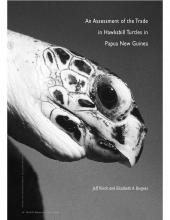
An assessment of the trade in Hawksbill turtles in Papua New Guinea
Available Online

Burgess Elizabeth A

,

Kinch Jeff

2009
The trade in Hawksbill Turtles Eretmochelys imbricata, medium-sized cheloniids with a pan-tropical distribution, has been recognized as a key threat to their conservation in the wild, and has greatly contributed to the species being listed as Critically Endangered in the IUCN Red List (Milliken and Tokunaga, 1987; Groombridge and Luxmoore, 1989; Meylan and Donnelly, 1999; van Dijk and Shepherd, 2004; TRAFFIC Southeast Asia Indo china, 2004; Bräutigam and Eckert, 2006; Mortimer and Donnelly, 2007; IUCN, 2009). Sought after for its thick keratinous shell plates (often referred to as bekko or tortoiseshell), eggs, and sometimes meat, unsustainable harvest levels have endangered the Hawksbill Turtle throughout its distribution. Declines in populations in the Pacific have been widely reported (Hirth, 1971; Witzell and Banner, 1980; Pritchard, 1982; Balazs, 1983; Witzell, 1983; Johannes, 1986; Groombridge and Luxmoore, 1989; Miller, 1994; NMFS and USFWS, 1998; Meylan and Donnelly, 1999; Mortimer and Donnelly, 2007). Hawksbill Turtles and their eggs are widely used in Papua New Guinea for a variety of purposes, including subsistence, sale, barter (Spring, 1980, 1981, 1982a,b,c; Pernetta and Hill, 1981; Wright and Richards, 1983; Kinch, 1999, 2002, 2003a; Koczberski et al., 2006) and for celebrations at Christmas and the end of the school year, which coincide with the peak turtle nesting period in the austral summer months (Kwan, 1994; Kinch, 1999, 2002, 2003a). In many areas of Papua New Guinea, Hawksbill Turtles are also opportunistically taken as ‘by-catch’ by fishers out on the reefs targeting lobsters, shellfish and sea cucumbers.