Search the SPREP Catalogue

Refine Search Results

Tags / Keywords

Available Online

Tags / Keywords

Available Online

62 result(s) found.

Sort by

You searched for

  • Related Countries Kiribati
    X
  • Related Countries New Caledonia
    X
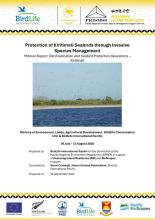
Protection of Kiritimati Seabirds through Invasive Species Management
SPREP Publications, Biodiversity Conservation, BRB
Available Online

Cranwell, Steve

2025
The Wildlife Conservation Unit and BirdLife International successfully completed baiting operations to eradicate Pacific rats from 13 motu including Motu Upua in the Kiritimati Central Lagoon. Four of these motu were previously rat free (Drum islets) and 3 others (Nimroona islets) had been baited in 2023 but rats (and one cat) were confirmed present likely following a reduction in the water level of the lagoon. The 14-day field mission also strengthened WCUs capability for detecting rats and cats and in the use of tools and practices to eradicate them. A suppression response for cats was initiated on Big Peninsula but requires WCU personnel to have regular access to vehicles to operationalise it. Observations of seabirds confirmed Phoenix Petrel numbers remain high for the Drum and Nimroona islets, but few nesting Red-tailed Tropicbirds were observed and may be attributable to the widespread poaching of these and other seabirds. Access to vehicles enabling reinstatement of regular patrols by WCU personnel is considered critical and could be facilitated through specialist expertise and the provision of parts in making repairs to the existing fleet. Other recommendations include a regular surveillance programme for priority islets to detect and respond to rat incursions.
Case Study Asbestos - Banaba
SPREP Publications, Waste Management and Pollution Control
Available Online
2025
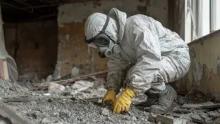
The project involved the removal of asbestos containing material from selected buildings on the Island of Banaba, and the development of a Strategic Asbestos Management Plan. Three buildings were targeted for abatement activities, with 3,645m2 of non-friable asbestos containing material roofing sheets and cladding to be removed. Tasks included: (1) arranging the Environmental Permit required by the Government of Kiribati for the work to proceed, (2) chartering a vessel to take the asbestos abatement crew to Banaba Island (a trip of about two days) and pick them up after the work was completed, (3) training thirty-eight workers to undertake abatement including local Banaba island personnel, (4) provide logistical support, i.e., meals and accommodations for the workers, (5) provide ancillary supplies and equipment, i.e., sea-sickness tablets, two generators, mattresses, mosquito nets, gas cookers, two motorcycles, (6) providing a Starlink system to enable internet communications, and (7) arrange for the shipment of the asbestos containing material to New Zealand for disposal. The remote nature of Banaba Island meant there was no appropriate landing craft adding additional complications to loading the asbestos containing material for shipment. The asbestos containing material was disposed of at the EnviroNZ landfill, Hampton Downs, Auckland, New Zealand.
Dispositif de suivi de l'abondance et de l'impact du cerf - Fiche finale de capitalisation - PROTEGE
SPREP Publications, Biodiversity Conservation, BRB
Available Online

PROE / SPREP

2025
Des dispositifs innovants de suivi ont été développés afin de mesurer l’impact du Cerf Rusa sur le sous-bois de forêts humides de Nouvelle Calédonie et évaluer l’abondance de cette espèce envahissante, dans trois zones prioritaires du territoire. L’élaboration de ces dispositifs poursuit des objectifs complémentaires aux actions de régulation professionnelle mises en œuvre dans le cadre de PROTEGE. Le suivi vise notamment à réaliser un état initial et à évaluer les bénéfices des opérations de régulation, grâce à des outils adaptés à des zones d’intervention difficiles d’accès et caractérisées par une biodiversité exceptionnelle, plus de 80% des espèces végétales des forêts humides d’altitude étant endémiques à la Nouvelle-Calédonie. Un travail initial de sectorisation a permis mieux de caractériser les enjeux, les pressions sur l’environnement ainsi que le contexte socio-économique afin de délimiter les zones d’intervention prioritaires. Pour la première fois en Nouvelle-Calédonie, un protocole standardisé de mesure de l’impact des cerfs a été élaboré. Il s’appuie sur plusieurs indicateurs et prend en compte les spécificités des espèces végétales concernées et des contraintes associées à sa mise en œuvre. En complément, PROTEGE a permis d’élaborer une méthodeinnovante d’évaluation de l’abondance des cerfs, reposant sur l’utilisation d’un drone équipé de capteur thermique pour l’enregistrement de vidéos nocturnes. Un algorithme développé spécifiquement a par ailleurs vocation à réaliser automatiquement les détections à partir de ces vidéos, facilitant considérablement le traitement des données. La mise en œuvre de ce protocole pour la prospection de 4 700 hectares a révélé des densités de populations et des concentrations de hardes localement très élevées, atteignant par endroits des niveaux parmi les plus élevés enregistrés à l’échelle mondiale. Ces résultats fournissent des informations précieuses pour le ciblage de futures interventions et le suivi de leurs bénéfices. FICHE FINALE DE CAPITALISATION DU PROJET PROTEGE, financé par l'Union Européenne.