Search the SPREP Catalogue

5 result(s) found.

Sort by

You searched for

  • Publication Year 2017
    X
  • Subject Climate Change
    X
Paris Climate Agreement: Beacon of Hope
Available Online

Ross J. Salawitch, Timothy P. Canty, Austin P. Hope, Walter R. Tribett, Brian F. Bennett

2017
On 11 November 2014, a remarkable event occurred. President Barack Obama of the United States and President Xi Jinping of China announced a bilateral agreement to reduce the emission of greenhouse gases (GHGs) that cause global warming by their respective nations. On 12 December 2015, a year and a month later, representatives of 195 countries attending the 21st Conference of the Parties of the United Nations Framework Convention on Climate Change meeting in Paris, France, announced the Paris Climate Agreement. The goal of the Paris Climate Agreement is to limit the future emission of GHGs such that the rise in global mean surface temperature will be no more than 1.5 °C (target) or 2.0 °C (upper limit) above the pre-industrial level. The Paris Climate Agreement utilizes an approach for reducing the emissions of GHGs that is distinctly different than earlier efforts. The approach for Paris consists of a series of Intended Nationally Determined Contributions (INDCs), submitted by the world’s nations, reflecting either a firm commitment (unconditional INDCs) or a plan contingent on financial and/or technological support (conditional INDCs). The Obama–Xi announcement was instrumental in the framing of the Paris Climate Agreement. The INDCs submitted by the USA and China were built closely upon the November 2014 bilateral announcement. China and the USA rank number one and two, respectively, in terms of national emission of GHGs. Practically speaking, unified global action to combat global warming required these two nations to get on the same page.
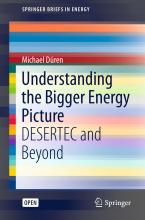
Understanding the Bigger Energy Picture
Available Online

Michael Düren

2017
Since thousands of years, the human race has been developing cultural skills and technological capabilities that support its struggle for survival and lead to dominance over all other species. Since about a century, the exponential growth of knowledge, technology, industry and population (see Fig. 1.1) has reached a scale where man modifies biosphere to an extent, that living conditions on the whole planet earth start to change significantly. Resources that had been abundant are becoming scarce within decades. We have arrived in the Anthropocene [1] where man has a significant impact on the basic living conditions of the biosphere of the whole planet. A continuation of this growth rate will unavoidably reach its natural limits where resources vanish; the biosphere will change more rapidly than the ability of organisms and ecosystems to accommodate, and contaminations will endanger living. When such a condition is reached, it is likely that our human civilization will collapse and human population will diminish rapidly. Historic examples demonstrated that drought, hunger, wars and epidemics were typical endpoints of drastic environmental changes and overpopulation. While historic examples mostly affected only individual towns, islands, countries or indigenous nations, the limits of growth this time affect the whole planet and there is no “new world” to which our civilization can migrate. Recent research has proven that the era of a new biological mass extinction has already started [2] and it can be assumed that finally also our species will be affected.
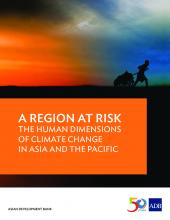
A region at risk - The human dimensions of climate change in Asia and the Pacific
Climate Change Resilience, Biodiversity Conservation
Available Online

Asian Development Bank

2017
The Asia and Pacific region is extremely vulnerable to the impacts of climate change. Unabated warming could significantly undo previous achievements of economic development and improvements of living standards. At the same time, the region has both the economic capacity and weight of influence to change the present fossil-fuel based development pathway and curb global emissions. This report sheds light on the regional implications of the latest projections of changes in climate conditions over Asia and the Pacific. The assessment concludes that, even under the Paris consensus scenario in which global warming is limited to 1.5°C to 2°C above preindustrial levels, some of the land area, ecosystems, and socioeconomic sectors will be significantly affected by climate change impacts, to which policy makers and the investment community need to adapt to. However, under a Business-As-Usual (BAU) scenario, which will cause a global mean temperature rise of over 4°C by the end of this century, the possibilities for adaptation are drastically reduced. Among others, climate change impacts such as the deterioration of the Asian “water towers”, prolonged heat waves, coastal sea-level rise and changes in rainfall patterns could disrupt ecosystem services and lead to severe effects on livelihoods which in turn would affect human health, migration dynamics and the potential for conflicts. This assessment also underlines that, for many areas vital to the region’s economy, research on the effects of climate change is still lacking.