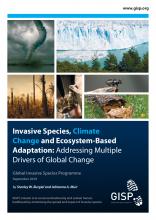
Invasive species, climate change and ecosystem-based adaptation: addressing multiple drivers of global change


Climate Change Resilience, BRB
Available Online
Burglele Stanley W.
,
Muir Adrianna A
2010
This report is targeted at policy-makers, particularly those responsible for developing climate mitigation and adaption strategies that address issues like conservation, ecosystem services, agriculture and sustainable livelihoods. It focuses on the primary linkages between invasive species and climate change, as well as the secondary and tertiary interactions of their corresponding impacts. Finally, the enclosed recommendations are intended to provide guidance on the best ways to integrate invasive species prevention and management into the consideration of climate change responses across a range of sectors. Building on a review of existing scientific and conservation literature (which is frequently centered on well-studied invasive species in developed countries), our research has reaffirmed that there are significant gaps and questions about the intersection of these two major drivers of change. The case studies included below highlight key relationships and questions related to invasive species, climate change and the role of ecosystem-based adaptation. The three key messages that can be distilled from this report are: 1. Climate change will have direct and second order impacts that facilitate the introduction, establishment and/or spread of invasive species. 2.Invasive species can increase the vulnerability of ecosystems to other climate-related stressors and also reduce their potential to sequester greenhouse gasses. 3.Using an ecosystem-based adaptation approach, these pressures on ecosystems and their ability to provide important services can be offset by preventing the introduction of new invasive species and by eradicating or controlling those damaging species already present.