
Search the SPREP Catalogue

3 result(s) found.

Sort by

You searched for

  • Available Online No
    X
Espaces et plateformes d'échanges régionaux sur les EEE - Fiche finale de capitalisation - PROTEGE
SPREP Publications, Biodiversity Conservation, BRB

PROE / SPREP

2025
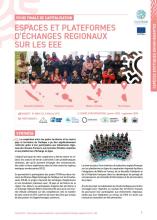
La coopération entre les quatre territoires et les autres pays et territoires du Pacifique a pu être significativement renforcée grâce à leur participation aux événements régionaux des réseaux d’acteurs, aux tournées d’études conjointes et aux plateformes d’échange en ligne. L’objectif principal de cette coopération a été de mettre en relation les acteurs de terrain confrontés à des problématiques similaires, afin qu’ils puissent échanger des connaissances, des outils et leurs expériences dans la lutte contre les espèces exotiques envahissantes (EEE). En permettant la participation des quatre PTOM aux deux réunions du Réseau d’Apprentissage du Pacifique sur les Envahissants (PILN), le projet a favorisé des échanges d’expériences et une émulation précieuse avec 18 pays et territoires de la région. Par ailleurs, la participation d’agents des territoires à un échange régional dédié à la biosécurité ainsi qu’à une tournée d’étude certifiante sur des compétences clés en matière de lutte contre les EEE a permis de tisser des liens par le biais de discussions et d’apprentissages communs. La mise en place d’une interface de traduction anglais/français sur les plateformes en ligne de coopération régionale facilitera l’intégration de Wallis-et-Futuna, de la Nouvelle-Calédonie et de la Polynésie française dans les dynamiques de partage de connaissances, de remontée d’informations et de structuration de projets. À la fin du projet, la mobilisation du Fonds Pacifique pourra être envisagée pour répondre au souhait des territoires français de poursuivre leur participation aux événements régionaux, tandis que leur intégration au réseau du PILN et l’accès aux ressources associées ont été pérennisés. FICHE FINALE DE CAPITALISATION DU PROJET PROTEGE, financé par l'Union Européenne.
Systematic review of the land snails of the Pitcairn Islands / R.C. Preece
BRB

Preece, R.C.

1995
The land snails (and semi-terrestrial molluscs) of the four islands that comprise the Pitcairn group are reviewed and the indigenous species illustrated. The strictly terrestrial molluscan faunas from the two atolls (Oeno and Ducie) are poor, like many other atolls in the Paci c. Each supports less than six species with wide geographical ranges. In contrast, the terrestrial molluscan fauna from Henderson Island, an uplifted atoll, is more diverse with at least 16 species belonging to seven families. Over half these taxa appear to be endemic, at least at the level of sub-species. Two species of semi-terrestrial molluscs have also been found on Henderson. Analyses of archaeological deposits in caves near the North Beach have revealed that at least a further six species of land snail formerly occurred on Henderson. The volcanic island of Pitcairn, the only island in the group still inhabited, supports the greatest number of terrestrial molluscs. Twenty-six species of land snail (and one semi-terrestrial pulmonate) were found living there during the recent expedition and a further three taxa were recognized amongst museum material. At least seven of these species are thought to be recent adventives and a further three are likely to have been prehistoric introductions. One Henderson (Georissa hendersoni) and three Pitcairn endemics (Paci cella lica, Sinployea pitcairnensis and Diastole tenuistriata) are formally described as new species. Some of the Pitcairn endemics occur in very restricted areas (less than a hectare) and it is important that measures should be taken to prevent the spread of invasive plants, such as rose-apple, that would threaten their survival.