Search the SPREP Catalogue

Refine Search Results

Related Countries

Language

Material Type

Available Online

Related Countries

Material Type

Available Online

93 result(s) found.

Sort by

You searched for

  • Author PACC
    X
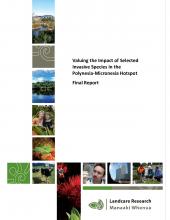
Valuing the impact of selected invasive species in the Polynesia-Micronesia hotspot, final report
BRB
Available Online

Aalbersberg, Bill

,

Boudjelas, Souad

,

Brown, Pike

,

Daigneault, Adam

,

Greenhalgh, Suzie

,

Mather, John

,

Nagle, William

2013
Invasive species pose an enormous threat in the Pacific: not only do they strongly affect biodiversity, but they also potentially affect the economic, social, and cultural wellbeing of Pacific peoples. Invasive species can potentially be managed and that their impacts can potentially be avoided, eliminated, or reduced. However, neither the costs nor the numerous benefits of management are well understood in the Pacific. Thus, the goals of this project were: A) to account for both the costs and benefits of managing invasive species; B) to prepare empirically grounded advocacy materials to help increase investment in the management of invasive species; C) to help governments prioritise investment in managing these species; and D) to build capability for undertaking economic assessments in the future. To accomplish these goals, we undertook cost-benefit analyses (CBAs) of managing five species that are well established on Viti Levu, Fiji: spathodea campanulata (African tulip tree), herpestus javanicus (small Asian mongoose), papuana uninodis (taro beetle), pycnonotus cafer (red-vented bulbul), and merremia peltata (merremia vine). Next, we conducted a comprehensive training programme on the CBA for invasive species management for professionals from the Pacific. Third, we collaborated with Pacific organisations to develop a uniform guide to conducting CBAs with numerous examples from the region. We also designed a flexible Microsoft Excel-based tool for conducting CBAs, enabling professionals who did not attend the training course to nevertheless undertake rigorous CBAs on invasive spsecies management. Finally, we developed advocacy material and publicised findings from this project to promote investment in invasive species management. This report details these activities in turn. It also includes numerous appendices that include the tools, guidance documents, and advocacy materials developed under this project.
Quantification and magnitude of losses and damages resulting from the impacts of climate change: modelling the transformational impacts and costs of sea level rise in the Caribbean
Climate Change Resilience
Available Online

Simpson, M.C...[et al.]

2010
The inextricable links between climate change and sustainable development have been increasingly recognised over the past decade. In 2007, the Intergovernmental Panel on Climate Change (IPCC)1 concluded with very high confidence that climate change would impede the ability of many nations to achieve sustainable development by mid-century and become a security risk that would steadily intensify, particularly under greater warming scenarios. Article 4.8 of the United Nations Framework Convention on Climate Change (UNFCCC) lists several groups of countries that merit particular consideration for assistance to adapt to climate change “especially: (a) small island countries, (b) countries with low-lying coastal areas, c) countries with areas prone to natural disasters.” Small Island Developing States (SIDS) have characteristics which make them particularly vulnerable to the effects of climate change, sea level rise (SLR) and extreme events, including: relative isolation, small land masses, concentrations of population and infrastructure in coastal areas, limited economic base and dependency on natural resources, combined with limited financial, technical and institutional capacity for adaptation.2