Search the SPREP Catalogue

Refine Search Results

Material Type

Available Online

Material Type

Available Online

93 result(s) found.

Sort by

You searched for

  • Author PACC
    X
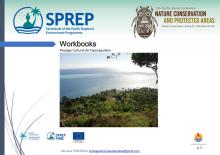
Workbook : Paysage culturel de Taputapuātea
SPREP Publications, Biodiversity Conservation, BRB
Available Online

Direction de l'Environnement

,

Direction de la Culture et du Patrimoine

,

Teriitehau, Raimana

2020
Les sites d’action visé par le plan de travail font référence aux parcelles affectées par la Polynésie française à sa Direction de la Culture et du Patrimoine (DCP) pour la gestion du Paysage Culturel Taputapuātea. De par cette maîtrise foncière s’en suit un droit d’intervention dans le cadre précis sur la lutte contre les espèces exotiques envahissantes. De plus elle permet de garantir le suivi et l’évaluation des actions qui seront menées sur la période du projet et voir au-delà. Globalement, en matière de biodiversité et de la culture polynésiennne ces sites se définissent selon 3 critères: (i) chaque site présente un attrait culturel majeur avec la présence plus ou moins importante de vestiges archéologiques; (ii) la faune et la flore qui s’y développe est indigène et/ou d’introduction polynésienne “naturalisé”; et (iii) des espèces protégés par le code de l’environnement polynésien et incrites sur la liste rouge de l’UICN sont présentes. La sacralité et le respect de ces lieux par la communauté locale est un atout de préservation de ces attributs « Nature et culture ». Ces sites s’incrivents dans un paysage anthropisé, il faut néanmoins les considérés comme des points refuge pour la biodiversité.
Quantification and magnitude of losses and damages resulting from the impacts of climate change: modelling the transformational impacts and costs of sea level rise in the Caribbean
Climate Change Resilience
Available Online

Simpson, M.C...[et al.]

2010
The inextricable links between climate change and sustainable development have been increasingly recognised over the past decade. In 2007, the Intergovernmental Panel on Climate Change (IPCC)1 concluded with very high confidence that climate change would impede the ability of many nations to achieve sustainable development by mid-century and become a security risk that would steadily intensify, particularly under greater warming scenarios. Article 4.8 of the United Nations Framework Convention on Climate Change (UNFCCC) lists several groups of countries that merit particular consideration for assistance to adapt to climate change “especially: (a) small island countries, (b) countries with low-lying coastal areas, c) countries with areas prone to natural disasters.” Small Island Developing States (SIDS) have characteristics which make them particularly vulnerable to the effects of climate change, sea level rise (SLR) and extreme events, including: relative isolation, small land masses, concentrations of population and infrastructure in coastal areas, limited economic base and dependency on natural resources, combined with limited financial, technical and institutional capacity for adaptation.2