
Search the SPREP Catalogue

2 result(s) found.

Sort by

You searched for

  • Available Online No
    X
Espaces et plateformes d'échanges régionaux sur les EEE - Fiche finale de capitalisation - PROTEGE
SPREP Publications, Biodiversity Conservation, BRB

PROE / SPREP

2025
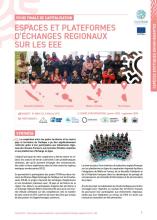
La coopération entre les quatre territoires et les autres pays et territoires du Pacifique a pu être significativement renforcée grâce à leur participation aux événements régionaux des réseaux d’acteurs, aux tournées d’études conjointes et aux plateformes d’échange en ligne. L’objectif principal de cette coopération a été de mettre en relation les acteurs de terrain confrontés à des problématiques similaires, afin qu’ils puissent échanger des connaissances, des outils et leurs expériences dans la lutte contre les espèces exotiques envahissantes (EEE). En permettant la participation des quatre PTOM aux deux réunions du Réseau d’Apprentissage du Pacifique sur les Envahissants (PILN), le projet a favorisé des échanges d’expériences et une émulation précieuse avec 18 pays et territoires de la région. Par ailleurs, la participation d’agents des territoires à un échange régional dédié à la biosécurité ainsi qu’à une tournée d’étude certifiante sur des compétences clés en matière de lutte contre les EEE a permis de tisser des liens par le biais de discussions et d’apprentissages communs. La mise en place d’une interface de traduction anglais/français sur les plateformes en ligne de coopération régionale facilitera l’intégration de Wallis-et-Futuna, de la Nouvelle-Calédonie et de la Polynésie française dans les dynamiques de partage de connaissances, de remontée d’informations et de structuration de projets. À la fin du projet, la mobilisation du Fonds Pacifique pourra être envisagée pour répondre au souhait des territoires français de poursuivre leur participation aux événements régionaux, tandis que leur intégration au réseau du PILN et l’accès aux ressources associées ont été pérennisés. FICHE FINALE DE CAPITALISATION DU PROJET PROTEGE, financé par l'Union Européenne.
Freshwater ichthyofauna of the Pacific-Asia Biodiversity Transect (PABITRA) Gateway in Viti Levu, Fiji
Biodiversity Conservation

Boseto, David T.

,

Copeland, Lekima K. F.

,

Jenkins, Aaron P.

2016
The freshwater ichthyofauna of the Fiji islands remained poorly documented before the establishment of the Pacific-Asia Biodiversity Transect (PABITRA) network. The PABITRA approach assesses biodiversity along ocean-to-mountain transects and promotes sustainable land use on islands across the Pacific. Multiple surveys of freshwater fish species along the Viti Levu PABITRA transect have contributed six new occurrence records and one new species to the known freshwater fishes of Fiji since 2002. In total, 21 indigenous species of fish (9% endemic) from 10 families and no introduced fishes were found in the three PABITRA sites. Diversity was highest (16 species) at Savura forest reserve and decreased further inland into Sovi and Wabu. The assemblage found is dominated by highly migratory species (95%) that traverse the different aquatic habitats (marine, estuarine, lowland and upland streams) covered by the PABITRA transect. This high degree of connectivity highlights several growing issues affecting aquatic fauna on the high island of Viti Levu. The reduction in forest cover along the gateway transects, especially in the terminal reaches, and infrastructure development such as dams and weirs have deleterious effects on the migration routes of the Fijian ichthyofauna. Several species collected are important food sources and have cultural totemic importance to local inhabitants along the vertical transect. This paper documents the ichthyofauna of the Fiji gateway transect, ecological characteristics of this assemblage, IUCN Redlist conservation assessment status and highlights factors affecting the fragility and resilience of these communities, particularly focusing on the importance of life-history patterns and watershed conditions.